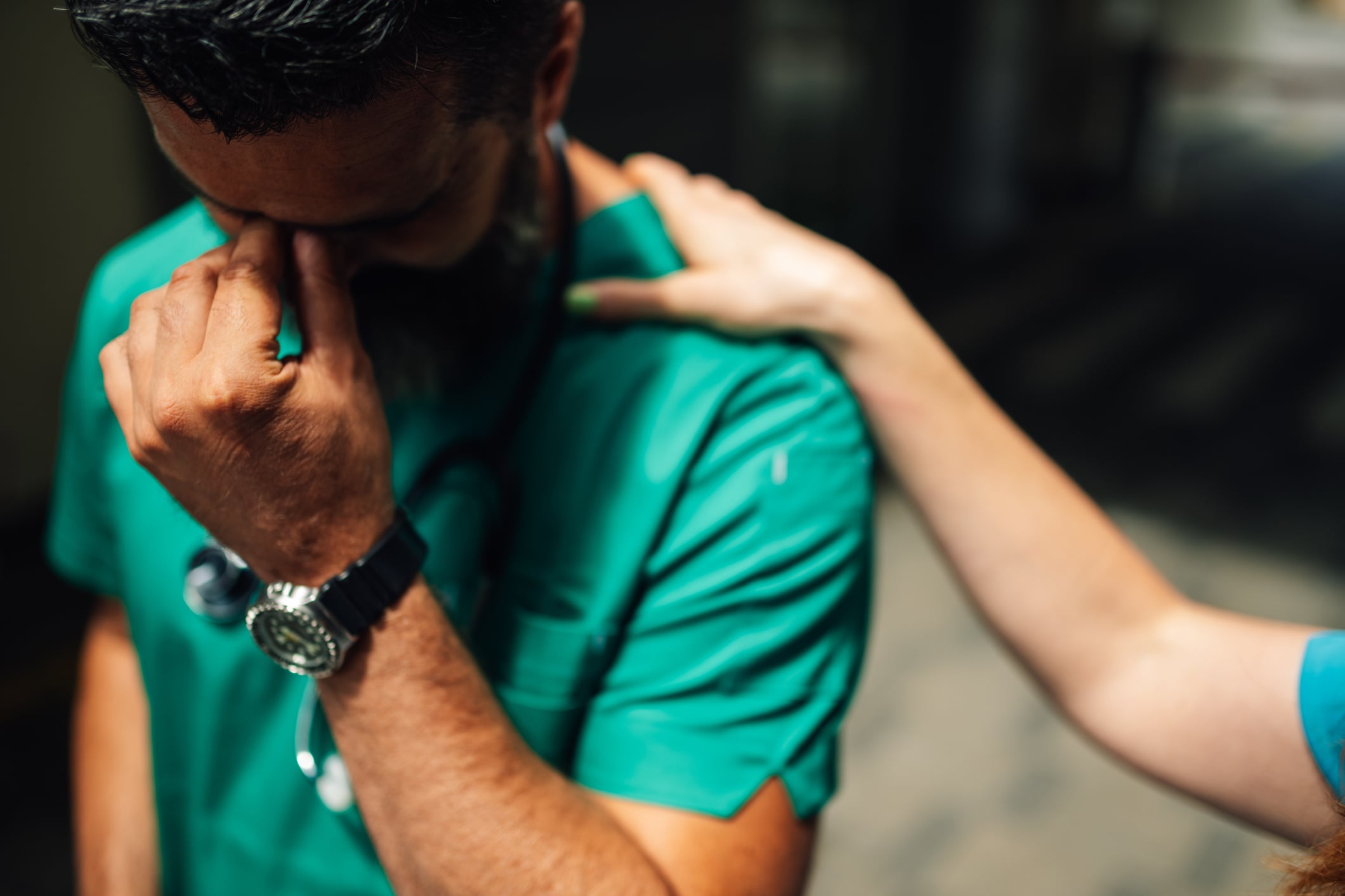


 Many Nurses and Doctors said in interviews with TIME, that fighting COVID-19 is making them feel more dedicated to their chosen career, and determined to persevere and help their patients. But, many also said they were struggling with negative feelings.
Healthcare workers are afraid of spreading the virus to their families, frustrated about the lack of PPE, and feel they can’t do enough for their patients. First responders are tired from long shifts, and are extremely sad for their dying patients, of which many are passing away alone. This is heartbreaking.
Dr. Jay Kaplan, an emergency room Physician and wellness specialist at LCMC Health system in New Orleans, lets his staff know they aren't alone. He listens as Nurses and Doctors share their fears and problems.
Kaplan tells them it’s okay to get sad or angry over the coronavirus. He reads them his poems. He shares that one day he came home and cried to his wife because he was overwhelmed by the rate of dying patients.
“We need to break the culture of silence and let people know it’s okay not to have it all together all the time,” he said.
Kaplan’s “wellness visits” are a key strategy in preventing healthcare workers from spiraling into depression and post-traumatic stress disorder during the pandemic. Many hospitals across the U.S. are launching similar initiatives.
Mount Sinai hospitals in New York City ramped up initiatives, such as a 24/7 mental health crisis line and one-on-one counseling. It also launched a wellness and resilience center that will track staffers' mental health long term.
Dr. Deborah B. Marin, Professor of Psychiatry at the Icahn School of Medicine at Mount Sinai and Director of the new center said, “This multi-disciplinary center will consider the physical, emotional, mental and spiritual needs of our entire health care community, including those on the frontline and in supporting roles. Working closely with every department across the health system, our aim is to not only address but to also prevent the development of mental health issues before they occur by intervening early, offering resilience training and treatment for every health care working in need. It’s important that we launch now as this crisis continues to evolve and take a toll on our community.”
Several healthcare workers in the TIME interviews said, among all the uncertainty and fear, they have found some relief in support from their families, communities, and one another.
We’re offering this article during Nurses Week as a reminder to all to be as patient, kind and loving to our Nurses, Healthcare workers, first responders, grocery store employees and all the people out there working to keep us safe. Thank you!