

I've been a Nurse long enough to remember when "burnout" wasn't something we talked about openly. You pushed through a brutal shift, grabbed a lukewarm coffee from the break room, and did it all again the next day. Admitting you were struggling felt like weakness, or worse, like you weren't cut out for the job you'd worked so hard to get.
That culture hasn't entirely disappeared. But at least now, we have data, real numbers that force healthcare institutions and policymakers to look at what's happening to the people caring for their patients. The 2026 Nurse Salary and Work-Life Report from Nurse.com is the latest entry in that conversation, and while it holds a few cautious bright spots, it mostly confirms what those of us on the floor already know in our bones: this is still a crisis.
Let me walk you through what stands out to me, Nurse to Nurse.
The Headline Number: 53% And Why That's Not Actually Good News
More than half of all Nurses surveyed, 53% reported experiencing burnout in the past two years. I want to acknowledge the modest improvement: that's down from 59% in 2024. Progress is progress, and I'll take it.
But let's be honest with each other. When more than one in two Nurses say they're burned out, that isn't a workforce that's recovering. That's a workforce that's been running on fumes for so long that fumes have started to feel normal.
And here's the number that hits harder than the burnout rate itself: 62% of Nurses said they felt overwhelmed. Overwhelmed is burnout's waiting room. It's where you sit before the exhaustion becomes too deep to shake off with a long weekend or a few yoga classes your hospital system email promoted in a "wellness newsletter."
Prolonged stress (53%), ethical dilemmas and moral injury (51%), compassion fatigue (46%), these aren't just words on a survey. These are what you feel when you've been the one holding a patient's hand as they died because their family couldn't get there in time, then gone straight to answering call lights for the next four hours.
What's Actually Driving Burnout (Hint: It's Not That We Need More Resilience Training)
The report asked Nurses what workplace factors most negatively affect their mental health and well-being. Here's the top five:
- Dissatisfaction with salary and wage increase policies (49%)
- Lack of responsive leadership (48%)
- Unmanageable Nurse-to-patient ratios (48%)
- Documentation workload (43%)
- Not being heard (41%)
I have spent years listening to administrators tell Nurses to practice self-care and reach out to employee assistance programs. And while I'm not dismissing those resources entirely, notice what's on this list: pay. Leadership. Staffing ratios. Paperwork. Feeling invisible.
These are systemic problems. They are not fixed by a mindfulness app or a free smoothie in the break room during Nurses Week.
We cannot document our way out of short staffing. We cannot deep-breathe our way through a 1:7 Nurse-to-patient ratio on a Med-Surg floor. And we absolutely cannot feel valued when leadership doesn't respond to our concerns and our paychecks don't reflect the weight of what we carry.
Workplace Violence: The Number That Should Disturb Everyone
I need to spend a moment on this, because it doesn't get enough attention outside nursing circles.
83% of Nurses experienced verbal abuse from patients or family members. Nearly one in three Nurses (35%) experienced physical assault or abuse. And 15% of Nurses reported that workplace violence happened to them on a weekly basis.
Weekly.
Let that sit for a moment. We are talking about Nurses going to work knowing they may be hit, screamed at, or threatened, regularly, and still showing up. Because the patient in bed 4 still needs their medication. Because someone has to be there.
These numbers are reportedly higher than what was recorded in 2024, which means this trend is moving in the wrong direction. Workplace violence doesn't just cause physical harm. It fuels the emotional exhaustion that sits at the core of burnout. It erodes psychological safety. It makes people ask themselves, "Why am I doing this?"
And speaking of that question...
Nearly One in Four Nurses Is Thinking About Leaving
Twenty-four percent of Nurses in this survey said they are considering leaving the profession. Among male Nurses, that number climbs to 30%. LPNs and LVNs are also at 25%. Baby Boomers, many of whom are approaching retirement age, sit at 30% as well.
The top reasons Nurses left their last position? Better pay, dissatisfaction with management, and family or personal responsibilities.
This matters far beyond individual career decisions. Research has consistently linked burnout to increased turnover, greater staffing shortages, higher absenteeism, and impacts on patient care quality. When Nurses leave, the Nurses who stay absorb more. That makes the remaining Nurses more likely to burn out. Which makes more Nurses leave. You can see the cycle.
Demographics Most Impacted
The data breaks down in ways that are worth paying attention to, particularly for those of us who work in or lead diverse teams.
Asian Nurses reported the highest burnout rate of any racial or ethnic group surveyed, at 59%. They were also most likely to express concerns about patient data privacy in the context of AI, a reminder that emerging technology is not a neutral stressor; it lands differently depending on who you are and what communities you serve.
Hispanic, Latinx, and Spanish Nurses reported the highest rates of feeling overwhelmed, at 67%. Nearly seven in ten Nurses in this group are carrying that weight.
Black or African American Nurses were more likely to report receiving pay increases after earning certifications, a meaningful finding about what can support career growth and satisfaction for Nurses from this community.
White Nurses were most likely to report considering leaving the profession at 25%, and were the most represented group in the survey.
There is no one-size-fits-all approach to addressing burnout. The data makes that clear. Solutions need to be attentive to who is experiencing what, and why.
The Mental Healthcare Stigma That Still Lives Among Us
Here's something that stopped me: 21% of Nurses said they avoided seeking mental health services because they feared it would harm their careers.
I understand this fear. Deeply. The concern that disclosing mental health struggles could affect your license, your standing, your reputation, it is not irrational. It exists because of real historical patterns in how healthcare systems have treated Nurses who came forward.
But what it means in practice is that Nurses who need support aren't getting it. And that has consequences for the Nurses themselves, for their colleagues, and for their patients.
Healthcare institutions need to build genuinely confidential, destigmatized pathways to mental health support, not just list an EAP phone number in an employee handbook that nobody opens. And 20% of Nurses said they want more wellness resources from their employers, which tells us the desire is there.
A Few Cautious Signs of Hope
I don't want to leave you without acknowledging what the data also shows: things are, in small ways, getting better.
Burnout is down six percentage points since 2024. Feelings of overwhelm dropped from 68% to 62%. Concern about the job's effect on physical health fell from 49% to 40%. These aren't massive swings, but they are movement, and movement in the right direction matters.
What's less clear is why. Has hospital leadership genuinely improved? Have staffing models shifted? Are more Nurses setting firmer boundaries? The report doesn't tell us definitively, and the honest answer is probably that it's a combination of factors, some of which we control and many of which we don't.
What We Need to Say Out Loud
If you're a Nurse reading this and recognizing yourself in these numbers, the exhaustion, the overwhelm, the quiet wondering whether you can keep going, I want you to know that what you're experiencing is real, it is not a personal failure, and you are not alone.
The data shows clearly that this is a systems problem masquerading as an individual one. Burnout is not what happens when Nurses aren't tough enough. It's what happens when the conditions of nursing work are allowed to remain unsustainable.
And if you're a healthcare leader, an administrator, a policymaker reading this: the evidence is in front of you. Nurses are telling you, through surveys, through resignation letters, through the 15% who are experiencing violence every single week, what needs to change.
Pay Nurses fairly. Fix the staffing ratios. Create actual psychological safety where Nurses can speak up without fear. Stop the documentation burden from swallowing the time Nurses need to care for patients. Listen when Nurses tell you something is wrong.
That's not a resilience workshop. That's the work.
Data cited in this article is drawn from the 2026 Nurse Salary and Work-Life Report, published by Nurse.com, based on a survey of over 500 Nurses conducted nationally between September and October 2025.
 Nurse burnout is not a new concept. Nurses have been experiencing burnout for decades. However, since the COVID-19 pandemic, more Nurses than ever are experiencing burnout, making it a hot topic in the Nursing community. Nurse burnout is often brought on by everyday stressors like insufficient staffing, increased workload, high patient acuity, and even verbal or physical abuse from patients. These stressors result in physical, mental, and emotional fatigue. As a result, Nurse burnout has been a significant factor in the number of Nurses leaving bedside Nursing or even the profession altogether.
  Even before the pandemic, healthcare providers experienced burnout and other negative mental health issues. Now more than ever, it is critical health systems take steps to support their staff's well-being.
 Frontline healthcare workers face stressors during normal times, but especially now during a pandemic and hospitals are finding new ways to help their staff cope.
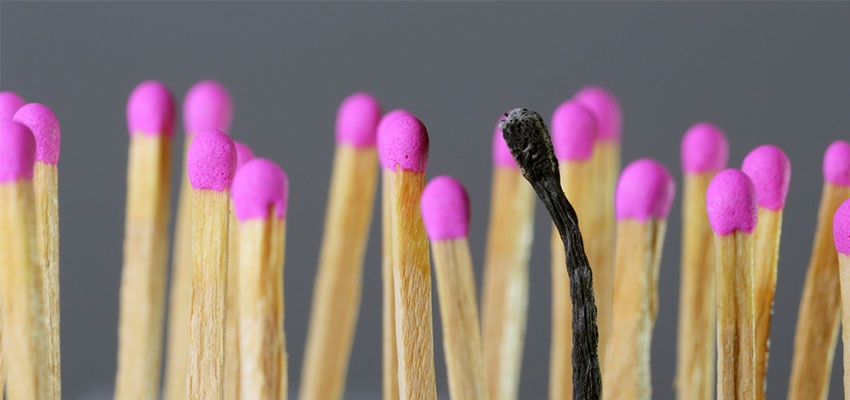 Burnout amongst Nurses isn't a new thing. In fact, it could be getting worse. With a combination of Nurses retiring and an influx of aging patients, this can become too much to handle and some will leave their profession.
 In order to provide top quality care to their patients, Nurses must be focused and alert. Burnout in Nurses is worrisome because common side effects are forgetfulness, impaired concentration, anxiety, and depression. As a Nurse leader you want to make sure patient's lives are in good hands and the Nurses are well.
  Every Nurse I know who works in a hospital, says they are amazed how much walking they do in their 12-hour shift. If you wear a Fitbit or another step tracking device, you know you walk miles during your shift. Here’s a story about a hospital that did a study to see where they could eliminate some steps for Nurses in the design of their new building.