Something Powerful

Tell The Reader More

The headline and subheader tells us what you're offering, and the form header closes the deal. Over here you can explain why your offer is so great it's worth filling out a form for.

Remember:

  • Bullets are great
  • For spelling out benefits and
  • Turning visitors into leads.

DiversityNursing Blog

Cultural Sensitivity in Nurse Education: Why It's Time to Move Beyond Checklists

Posted by Rebecca McGaughy, DNP, RN, Clinical Assistant Professor

Thu, Aug 06, 2026 @ 10:03 AM

The U.S. has grown more diverse with every passing year, and healthcare is feeling that shift directly. Nurses are increasingly caring for patients whose cultural backgrounds, languages, and belief systems differ from their own. Many of these patients — particularly those from African, Latino, and Asian communities — face some of the steepest barriers to healthcare access and carry a disproportionate share of the country's health disparities. Since COVID-19, "disparity" has become a household word, but the underlying problem it names — that race and ethnicity still shape health outcomes across nearly every measure — is far from new.

Nursing sits at the center of this challenge. As the largest group of healthcare providers in the country, nurses show up in every setting where care happens: hospitals, outpatient clinics, rural health centers, detention facilities, and beyond. That reach means nursing education has an outsized role to play in whether the profession helps close health disparities or unintentionally reinforces them.

What Cultural Sensitivity Actually Requires

It's tempting to think of cultural sensitivity as simply knowing that different cultures exist. But real cultural sensitivity goes further — it means understanding and respecting each patient's background, from their religious practices to their family structure to their social circumstances, and letting that understanding shape how nurses communicate, what they recommend, and how they deliver care.

Cultural sensitivity is best understood as one piece of a larger picture that includes cultural competence and cultural humility. Competence is built through education, immersion experiences, and stronger communication skills — but a nurse's age, self-awareness, and training also shape how culturally attuned they become.

Nursing decisions are never made in a vacuum. Every day, nurses draw on core ethical principles — autonomy, justice, non-maleficence, and beneficence — to guide patient care. Cultural sensitivity training helps nurses apply those principles more effectively across diverse patient populations, and it fosters a more collegial workplace for an increasingly diverse nursing workforce.

The Weight of Bias

None of this works without confronting bias directly. Every person carries both implicit and explicit biases — attitudes shaped by upbringing, personal experience, and even social media exposure. Explicit bias is the kind we're consciously aware of holding. Implicit bias is trickier: it operates below conscious awareness, but it still shapes how caregivers treat patients and colleagues, often leading to unintentional discrimination and worse health outcomes.

Left unexamined, these biases calcify into stereotypes that damage both patient care and student-faculty relationships. That's not abstract — it plays out in real careers. Decades ago, as a pre-licensure nursing student struggling through my first college chemistry class, I sought guidance from my faculty advisor. Instead of support, I was told, "Maybe you should be a social worker." I pushed through, passed chemistry that summer, and more than forty years later, I hold a doctoral degree in nursing. I've heard nearly identical stories from other Black nurses — being warned the program "could be tough" for them, or that it "might be financially challenging" given their background. These aren't isolated incidents; they're a pattern underrepresented students still face, which is why mentorship and cultural sensitivity training need to be built into how we prepare the next generation of nurses.

Accrediting bodies have taken notice: The Joint Commission and the American Nurses Credentialing Center's Pathway to Excellence program now require healthcare organizations to assess their diversity, equity, and inclusion efforts. That accountability matters — but only if it's backed by real change in how nursing students are taught.

Take the DiversityNursing.com "Unconscious Bias" Quiz Today

Why Cultural Humility Matters More Than Checklists

At the heart of good nursing care is a simple idea: every patient deserves to be treated with dignity. Cultural humility is what makes that possible in practice, asking nurses to bring empathy and genuine curiosity into every patient interaction rather than imposing their own assumptions.

Cultural humility differs from a rigid, fact-based approach to competence: it treats self-awareness as an ongoing practice, not a box to check, requiring nurses to critically examine their own biases continuously. Done well, this fosters what researchers call cultural fluidity — a seamless exchange between a nurse's own values and those of the patients and colleagues around them.

Research backs this up. Arruzza and Chau (2021) found that nursing students are eager to learn about cultural competence but often start out without a clear sense of their own strengths and gaps; structured education leaves them more satisfied and better able to identify their own learning needs. Antón-Solanas and colleagues (2021) found something more sobering: unaddressed implicit and explicit bias can take a real toll on students' mental health and academic performance. This isn't only about patient outcomes — it directly affects whether nursing students, especially those from underrepresented backgrounds, succeed and stay in the profession.

What the Research Says About Getting This Right

The broader literature reinforces the same conclusion: nursing can genuinely help close healthcare disparities when academic programs fully integrate culturally competent education and invest in training faculty to teach it well. But the training itself has to evolve — early cultural competency education often leaned on stereotypes that have since been discredited, and outdated versions can do more harm than good.

Faculty can't be exempt from this work either. Nurse educators need their own cultural competency training to prepare students for multicultural patient care. Yet studies show students still witness racial stereotyping from academic and clinical staff, creating what researchers describe as pressure to be "exceptional to be considered average." Combine that with reduced social support and a shortage of diverse faculty role models, and it's easy to see how it wears down even capable students. Proposed remedies include focusing more on social determinants of health, building genuinely safe clinical learning spaces, and prioritizing the retention of diverse faculty.

Much of today's thinking traces back to Madeleine Leininger's Transcultural Nursing Theory, which established that nurses must recognize and respect the cultural backgrounds, beliefs, and practices of every patient. Programs built around this theory report stronger empathy, sharper critical thinking, and deeper commitment to the profession. The American Association of Colleges of Nursing has since built on this foundation with its Essentials framework. Not every intervention shows the same staying power, though — unconscious bias training shows mixed long-term results, suggesting deeply ingrained biases don't always shift easily.

There's also a broader accountability question. A health profession school's "social mission" should mean more than teaching science well; it means embedding equity into the curriculum itself. Yet a review by Orbán and colleagues (2021) of nine health profession accreditation standards found that none of the nursing accreditation bodies examined explicitly required curricula to address student diversity or health disparities — a real blind spot in how the profession holds itself accountable.

Moving Forward

Cultural competence is necessary, but it's not sufficient on its own. Real progress requires systemic change across healthcare organizations, academic institutions, and the broader socioeconomic conditions that shape health. Every nurse has a role to play: examining personal biases honestly, collaborating openly with colleagues and students, and creating space for students to speak up when something conflicts with cultural sensitivity — an act of patient advocacy in its own right. Clinical training programs should also make room for real-world exposure: rotations in community health clinics, neighborhood health centers, international clinics, and cultural immersion experiences give students something no textbook can — direct contact with the communities they'll eventually serve.

The goal isn't a nurse who has memorized facts about every culture they might encounter. It's a nurse who walks into any room ready to listen, willing to be corrected, and committed to treating the person in front of them with the dignity they deserve.

References

American Association of Colleges of Nursing. (2023). The essentials: Competencies for professional nursing education [PDF]. https://www.aacnnursing.org/Portals/0/PDFs/Publications/Essentials-2021.pdf

Antón-Solanas, I., Tambo-Lizalde, E., Hamam-Alcober, N., Vanceulebroeck, V., Dehaes, S., Kalkan, I., Kömürcü, N., Coelho, M., Coelho, T., Casa Nova, A., Cordeiro, R., Sagarra-Romero, L., Subirón-Valera, A. B., & Huércanos-Esparza, I. (2021). Nursing students' experience of learning cultural competence. PLOS ONE, 16(12), e0259802. https://doi.org/10.1371/journal.pone.0259802

Arruzza, E., & Chau, M. (2021). The effectiveness of cultural competence education in enhancing knowledge acquisition, performance, attitudes, and student satisfaction among undergraduate health science students: A scoping review. Journal of Educational Evaluation for Health Professions, 18, 3. https://doi.org/10.3352/jeehp.2021.18.3

Chae, D., Kim, J., Kim, S., Lee, J., & Park, S. (2020). Effectiveness of cultural competence educational interventions on health professionals and patient outcomes: A systematic review. Japan Journal of Nursing Science, 17(3). https://doi.org/10.1111/jjns.12326

Etienne, S., & Lewis, L. (2024). Racial implicit bias: Perspectives of nursing students. Journal of Professional Nursing, 50, 95–103. https://doi.org/10.1016/j.profnurs.2023.10.007

Hughes, V., Delva, S., Nkimbeng, M., Spaulding, E., Turkson-Ocran, R.-A., Cudjoe, J., Ford, A., Rushton, C., D'Aoust, R., & Han, H.-R. (2020). Not missing the opportunity: Strategies to promote cultural humility among future nursing faculty. Journal of Professional Nursing, 36(1), 28–33. https://doi.org/10.1016/j.profnurs.2019.06.005

Joseph, O., Flint, S. W., Raymond-Williams, R., Awadzi, R., & Johnson, J. (2021). Understanding healthcare students' experiences of racial bias: A narrative review of the role of implicit bias and potential interventions in educational settings. International Journal of Environmental Research and Public Health, 18(23), 12771. https://doi.org/10.3390/ijerph182312771

Key data on health and health care by race and ethnicity. (n.d.). KFF. Retrieved April 3, 2025, from https://www.kff.org/key-data-on-health-and-health-care-by-race-and-ethnicity/?entry=health-coverage-access-to-and-use-of-care-access-to-and-use-of-care

Nursing workforce fact sheet. (n.d.). Retrieved April 3, 2025, from https://www.aacnnursing.org/news-data/fact-sheets/nursing-workforce-fact-sheet

Ogundipe, A., Hylton, D., & Alexander, P. (2023). Inclusion of cultural competence and racial awareness in nursing education: An exploration of the nurse educator role. Nurse Education Today, 120, 105611. https://doi.org/10.1016/j.nedt.2022.105611

Orbán, J., Xue, C., Raichur, S., Misak, M., Nobles, A., Casimir, J., & Batra, S. (2021). The scope of social mission content in health professions education accreditation standards. Academic Medicine, 97(1), 111–120. https://doi.org/10.1097/acm.0000000000004437

Pryce-Miller, M., Bliss, E., Airey, A., Garvey, A., & Pennington, C. R. (2023). The lived experiences of racial bias for black, Asian and minority ethnic students in practice: A hermeneutic phenomenological study. Nurse Education in Practice, 66, 103532. https://doi.org/10.1016/j.nepr.2022.103532

The future of nursing 2020-2030: Charting a path to achieve health equity. (n.d.). https://nap.nationalacademies.org/catalog/25982/the-future-of-nursing-2020-2030-charting-a-path-to

U.S. Census Bureau. (n.d.). 2020 U.S. population more racially, ethnically diverse than in 2010. U.S. Department of Commerce. Retrieved April 3, 2025, from https://www.census.gov/library/stories/2021/08/2020-united-states-population-more-racially-ethnically-diverse-than-2010.html

Vela, M. B., Erondu, A. I., Smith, N. A., Peek, M. E., Woodruff, J. N., & Chin, M. H. (2022). Eliminating explicit and implicit biases in health care: Evidence and research needs. Annual Review of Public Health, 43(1), 477–501. https://doi.org/10.1146/annurev-publhealth-052620-103528

Vella, E., White, V. M., & Livingston, P. (2022). Does cultural competence training for health professionals impact culturally and linguistically diverse patient outcomes? A systematic review of the literature. Nurse Education Today, 118, 105500. https://doi.org/10.1016/j.nedt.2022.105500


Topics: nursing students, Nursing Professors, cultural competence, Nursing Education, cultural competency, culturally competent care, nurse educator, cultural considerations, implicit bias, cultural humility in healthcare, cultural competence in nursing, implicit bias in nursing

Continuing Education For Nurses: Staying Up To Date In The Field

Posted by Erica Bettencourt

Mon, Nov 06, 2023 @ 12:02 PM

Why Continuing Education is Vital

Continuing education (CE) is vital for Nurses as it allows you to stay up to date with the latest advancements and best practices in the field. The healthcare field is constantly evolving, with new research, technologies, and treatments being introduced regularly. By participating in CE programs, you can ensure you're equipped with the most current knowledge and skills to provide the highest quality care to patients.

CE also helps Nurses maintain professional competence and meet the requirements for licensure and certification. Many licensing boards and professional organizations require Nurses to complete a certain number of CE hours to renew licenses or maintain certifications. By fulfilling these requirements, Nurses demonstrate commitment to ongoing learning and professional development.

Furthermore, CE can enhance Nurses' career prospects and open up new opportunities for advancement. Employers often value Nurses who are dedicated to continuous learning and seek out candidates who have pursued additional education and training. By expanding your knowledge and skills through CE, you can position yourself for promotions, specialized roles, or even leadership positions within organizations.

The Benefits of CE

CE offers numerous benefits. It allows you to improve clinical skills and knowledge, enabling you to provide better care for patients. By staying up to date with the latest evidence-based practices and advancements in healthcare, you can deliver more effective treatments and interventions.

CE also promotes professional growth and personal development. It provides Nurses with opportunities to expand areas of expertise, develop new skills, and explore different specialties. This not only enhances job satisfaction but also increases your value in the job market.

Additionally, CE fosters critical thinking and problem-solving skills. Through interactive learning experiences and case studies, Nurses are challenged to apply knowledge to real-world scenarios. This enables you to make informed decisions, adapt to changes in healthcare, and provide innovative solutions to complex problems.

Lastly, CE supports lifelong learning and a culture of continuous improvement in Nursing. It encourages Nurses to seek out new knowledge, embrace innovation, and contribute to the advancement of the profession. By actively engaging in CE, Nurses demonstrate a commitment to excellence and dedication to providing the highest standard of care.

Different Types of CE Programs for Nurses

There are various types of CE programs available for Nurses. Some common options include conferences, workshops, seminars, webinars, online courses, and academic programs.

Conferences and workshops provide opportunities to learn from experts in the field, engage in interactive discussions, and network with peers. These events often cover a wide range of topics and offer a platform for sharing research findings, best practices, and innovative ideas.

Seminars and webinars are typically more focused and provide in-depth education on specific topics. They can be accessed remotely, allowing you to participate from your own location. These formats are convenient for Nurses who may have limited time or travel restrictions.

Online courses and academic programs offer flexibility and convenience for Nurses who prefer self-paced learning or wish to pursue advanced degrees. These programs cover a wide range of subjects and can be tailored to meet individual learning needs and career goals.

It is important to choose CE programs that align with your interests, career goals, and learning preferences. By selecting programs that are relevant to your practice areas or areas of interest, you can maximize the benefits of CE and enhance your professional development.

How to Choose the Right CE Program

When choosing a CE program, you should consider several factors to ensure you're making the right decision. Assess your learning needs and identify areas you would like to improve or expand knowledge and skills.

Nurses should also consider the credibility and reputation of the program provider. It's important to choose programs offered by reputable organizations or institutions recognized in the Nursing profession. This ensures content is reliable, evidence-based, and of high quality.

Additionally, Nurses should evaluate the format and delivery method of the program. Some Nurses may prefer in-person interactions and hands-on learning, while others may prefer the flexibility of online or self-paced courses. It's important to choose a format that suits individual learning preferences and fits into your schedule and lifestyle.

Nurses should also consider the cost and accessibility of the program. While CE is an investment in professional growth, it's important to evaluate the financial implications and ensure the program is affordable. Accessibility refers to the availability of the program in terms of location, timing, and any potential travel or accommodation requirements.

Lastly, Nurses should seek feedback and reviews from other Nurses who have completed the program. Hearing about their experiences and outcomes can provide valuable insights and help you make an informed decision.

Tips for Successfully Completing CE Courses

Completing CE courses can be a rewarding and enriching experience. Here are some tips to help you successfully complete CE courses:

1. Set clear goals: Before starting a course, you should set clear goals and objectives. This will help you stay focused and motivated throughout the learning process.

2. Create a study schedule: Nurses should create a study schedule which fits into existing commitments and allows for dedicated time for learning and coursework. Consistency is key to successfully completing the course.

3. Take advantage of resources: Many CE programs provide additional resources such as textbooks, online materials, or access to databases. Nurses should take advantage of these resources to enhance learning and understanding of the course content.

4. Engage in active learning: Instead of passively absorbing information, you should engage in active learning by participating in discussions, asking questions, and applying the concepts learned to real-world scenarios.

5. Seek support and collaboration: Nurses should seek support from peers, instructors, or mentors. Collaborating with others can enhance the learning experience and provide opportunities for knowledge sharing and networking.

6. Reflect on the learning experience: After completing a course, you should take the time to reflect on what you've learned and how you can apply it to your practice. This reflection can help reinforce the knowledge and skills gained.

By following these tips, you can make the most of your CE courses and maximize your professional development.

Topics: continuing education, Nursing Education, nursing field

Need $10,000 to Support Your Nursing Education?

Posted by Erica Bettencourt

Mon, Dec 31, 2018 @ 10:01 AM

logoOnly 10 days remain for you to apply for a Foundation of the National Student Nurses Association scholarship to support your college tuition, fees and books. This year we are pleased to be offering scholarships of up to $10,000 to diverse nursing students.  There’s still time, but you need to get started now.  For more details and for link to application, click here. The deadline is January 11, 2019.

Topics: Nursing Education, nursing scholarships

The 2017 $5,000 Education Award Winner Is...

Posted by Pat Magrath

Tue, May 23, 2017 @ 11:49 AM

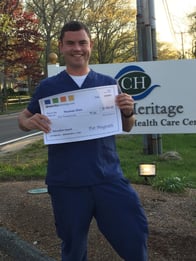
…and our 2017 DiversityNursing.com Annual $5,000 Education Award Winner is… Tom Dion.

image1 (1).jpg

Tom is a Memory Care Unit Manager at Cape Heritage Rehabilitation and Health Care Center in Sandwich, MA on Cape Cod. Tom was surprised and very happy when I called him to deliver the good news that he is our 2017 Winner!

Tom didn’t get into Nursing right away. His journey started at Westfield State University in MA as a student in Exercise Science to become a Physical Therapist. He graduated in 2008 and received his BS in Exercise/Movement Science. After school, he worked a variety of jobs, including moving furniture, medical equipment technician, as well as ice sculpting for weddings, the Bruins, and other functions.

He was always drawn to healthcare and when deciding on a new career path, he looked to do something that had more meaning. In his words, he “needed a spiritual change”. In 2012, he went to Nursing school at Signature Healthcare Brockton Hospital School of Nursing and graduated with an RN diploma. I asked him what was the draw to Nursing.

“I like the idea of helping people. Nursing provides fulfillment and meaning.”

While growing up, Tom spent a lot of time with his grandparents. He was very close to them. He was drawn to working with the geriatric community because of his understanding and love for his grandparents.

image1-422878-edited.jpg

Right out of Nursing school, Tom started working at Cape Heritage as a Staff Nurse doing sub-acute rehab. After 1 year, he was offered a position as the Wound Care Department Head and promoted to Assistant Director of Nurses.

Tom has worked there for 2.5 years and has gained valuable administrative and management experience. He’s now a Unit Manager of the Memory Care Unit, which is a restraint free facility. The memory care unit is his favorite because he’s able to “lend a voice for the patients that aren’t able to speak for themselves.”

"The residents provide the purpose that I was looking for."

He is always assessing his patient’s capabilities to ensure they are provided with everything needed to maintain their optimal level of function.

“It’s important to pay attention to your resident's behavior, because it often provides the most crucial insight you have into identifying a problem.”

He talked about a male patient of his, who requires reassurance on a continual basis. He is unable to communicate his needs at times, which may be as simple as which day of the week it is, what time it is, or using the restroom. “Working fast to address the root cause of his worry, and keeping him comfortable is a challenge I look forward to every day.”

It’s important to have a sense of humor because in the memory care unit,

“You live in their world”.

The reality of their world is abstract, a world that they can and will explain to you, in bits and pieces. “The rewarding part of my job is working with the residents to complete these thoughts and fill in the gaps.” When helping the residents, these moments create a lasting impression that leaves him with a sense of fulfillment he hasn’t gotten anywhere else in life. As a co-worker frequently reminds me, “when I leave work, Tom, my hands are clean and my heart is pure.”

Cape Heritage also provides hospice care. It’s not an easy job, but it is very much appreciated when family members thank them. Tom is often in awe of his team and the work they do. They are truly special people to work with this population.

I asked Tom about being a guy in Nursing. He said it was a big transition from working with mostly men to working with primarily women. He said “it’s been interesting in a good way” and he doesn’t feel he’s treated differently because he’s a guy. He’s treated well and enjoys his Monday – Friday 7am-3pm shift.

Like so many Nurses I talk to, Tom says the best part about Nursing is it can lead you in so many directions – hands-on Nursing, teaching, case management, etc. “There’s always something different you can be doing.” He’s enjoyed experiencing different parts of Nursing.

Tom’s future plans include getting his WOCN (Wound Ostomy & Continence Nurse) certification. He remembers one particular female patient that stands out. She came in with a wound the size of a basketball on her back and it was deep into her spine. He could actually see her spinal column. Because of the technology available, CPI (closed pulse irrigation), he was able to disrupt the bacteria and create a completely healthy environment. Many people thought it was impossible to heal and close her wound, but within 7-8 months she was completely healed!

While working full time, fishing and enjoying activities outdoors, Tom plans to pass the national boards and receive his WOCN certification by the end of this summer. Teaching is in his future as well.

Congratulations Tom Dion – we are proud of you and see great things in your future!

Registration is open at DiversityNursing.com for our 2018 $5,000 Education Award.

Topics: Nursing Education, Education award, Award Winner

Recent Jobs

Article or Blog Submissions

If you are interested in submitting content for our Blog, please ensure it fits the criteria below:
  • Relevant information for Nurses
  • Does NOT promote a product
  • Informative about Diversity, Inclusion & Cultural Competence

Agreement to publish on our DiversityNursing.com Blog is at our sole discretion.

Thank you

Subscribe to Email our eNewsletter

Recent Posts

Posts by Topic

see all