Something Powerful

Tell The Reader More

The headline and subheader tells us what you're offering, and the form header closes the deal. Over here you can explain why your offer is so great it's worth filling out a form for.

Remember:

  • Bullets are great
  • For spelling out benefits and
  • Turning visitors into leads.

DiversityNursing Blog

Navigating Nursing School As A Non-Traditional Student

Posted by Erica Bettencourt

Thu, Feb 05, 2026 @ 09:46 AM

Returning to school later in life or balancing nursing education with family and career responsibilities can feel overwhelming, but non-traditional students (NTS) bring unique strengths that make them exceptional nurses.

What Makes You A Non-Traditional Nursing Student

If you're pursuing your nursing degree while juggling a full-time job, caring for dependents, or attending school part-time, you're part of a growing majority in higher education. Over 70% of students today fit the criteria of "non-traditional," and nursing programs are seeing more and more students who bring rich life experience to their studies. Non-traditional nursing students often share common characteristics: they may be financially independent, supporting families, changing careers later in life, or balancing multiple responsibilities that extend far beyond the classroom and clinical setting.

What distinguishes you from traditional students isn't a deficit, it's a different set of circumstances that requires unique strategies and support systems. You might be a parent attending evening classes after putting your children to bed, a working professional completing prerequisites on weekends, or someone who served in the military and is now transitioning to healthcare. Perhaps you're a certified nursing assistant (CNA) seeking to advance your career, or you've spent years in another field and discovered your calling to nursing later in life.

Recognizing yourself as an NTS is the first step in advocating for your needs and accessing resources specifically designed to support your success. Many nursing programs now offer flexible scheduling options, online coursework, accelerated pathways, and evening or weekend clinical placements to accommodate diverse student populations. Understanding that you're not alone in facing these challenges, and that your circumstances are increasingly the norm rather than the exception, can help you approach nursing school with confidence and realistic expectations.

Leveraging Your Life Experience As Your Greatest Asset

Your years in the workforce, experiences raising a family, managing household finances, or navigating personal challenges have equipped you with skills that many traditional students are still developing. As an NTS, you bring emotional maturity, time management abilities, problem-solving skills, and a depth of empathy that comes from lived experience. These qualities translate directly into clinical competence and patient care excellence. 

Non-traditional students often demonstrate stronger motivation and clearer career focus than their counterparts. You've made a deliberate choice to pursue nursing, often with full awareness of the sacrifices involved. This intentionality drives persistence through challenging coursework and demanding clinical rotations. You're less likely to question whether nursing is the right path because you've already invested significant thought and planning into this decision. Your maturity also helps you maintain perspective during stressful periods, you understand that a difficult exam or challenging clinical day is temporary, not catastrophic.

Don't underestimate the professional skills you've developed in previous careers or life roles. If you've worked in customer service, you already understand patient-centered communication. If you've managed projects or teams, you have organizational skills that will serve you well in coordinating patient care. If you've parented children through illnesses or cared for aging relatives, you've developed assessment skills and the ability to remain calm under pressure. Make connections between your past experiences and nursing concepts during your studies. When instructors discuss therapeutic communication, reflect on successful conversations you've navigated in your personal or professional life. When learning about care coordination, consider how you've managed complex family or work situations. These mental connections will deepen your understanding and help you retain information more effectively.

A Balancing Act Without Burning Out

The reality of nursing school as an NTS means that your study time competes with work shifts, family obligations, and basic self-care needs. Burnout is a genuine risk when you're constantly operating in multiple demanding roles simultaneously. The key to sustainability isn't working harder, it's working smarter and setting boundaries that protect your physical and mental health. Start by having honest conversations with family members, employers, and instructors about your commitments and limitations. Many non-traditional students try to maintain the same level of performance in all areas of their lives, leading to exhaustion and resentment. Instead, recognize that nursing school is a temporary season that may require adjustments to your usual standards.

Create a realistic weekly schedule that accounts for all your commitments, including class time, clinical hours, study sessions, work shifts, family responsibilities, and essential self-care activities like sleep, meals, and exercise. Use digital calendars with color-coding to visualize where your time goes and identify potential conflicts early. Build in buffer time between commitments rather than scheduling back-to-back obligations. If you have a clinical shift that ends at 3 p.m. and need to pick up children at 4 p.m., that buffer hour prevents the constant stress of rushing. When possible, batch similar tasks together, prepare multiple meals on your day off, complete several reading assignments in one focused study session, or schedule back-to-back appointments to minimize transition time.

Learn to recognize your personal warning signs of burnout: persistent fatigue, irritability, difficulty concentrating, changes in sleep or appetite, or loss of motivation. When you notice these signs, it's time to reassess and make adjustments before reaching a crisis point. This might mean reducing work hours for a semester, asking family members to take on additional household tasks, or utilizing campus resources like tutoring services to make study time more efficient. Remember that asking for help isn't a sign of weakness, it's a strategic decision that increases your likelihood of success.

Communicate proactively with instructors if you're struggling; many are willing to provide extensions or additional support when students demonstrate genuine effort and communication. Most importantly, protect non-negotiable self-care activities. Skipping sleep to study might seem productive in the short term, but it impairs cognitive function and clinical performance, ultimately working against your goals.

Building Your Support Network And Finding Community

One of the greatest challenges NTS face is feeling isolated from peers who may be at different life stages or have fewer competing responsibilities. Building a strong support network, both within your nursing program and in your personal life, is essential for navigating the demands of nursing school. Start by connecting with other NTS in your cohort. You'll likely find that many classmates share similar challenges, even if their specific circumstances differ. Form study groups that meet at times accommodating to various schedules, or create online chat groups for quick questions and mutual encouragement. These connections provide both academic support and emotional validation when you're feeling overwhelmed.

Don't overlook the support available through your nursing program and campus resources. Many schools offer specific services for NTS, including childcare assistance, evening tutoring hours, financial aid counseling, and career services tailored to career changers. Academic advisors can help you plan course sequences that align with your work schedule or family commitments. Seek out faculty members who demonstrate understanding of NTS challenges, they can become valuable mentors who provide guidance, recommendation letters, and professional connections. Some nursing programs have peer mentorship initiatives that pair new students with those further along in the program, offering practical advice and encouragement from someone who has successfully navigated similar challenges.

Equally important is cultivating support in your personal life. Have frank discussions with family members about the demands of nursing school and how they can help. This might involve partners taking on more household responsibilities, older children contributing to chores, or extended family providing childcare during exam periods. If you're working while in school, explore whether your employer offers tuition assistance, flexible scheduling, or reduced hours during particularly demanding semesters. Some healthcare employers specifically support employees pursuing nursing degrees because they're investing in their future workforce. Finally, connect with the broader nursing community through professional organizations, online forums, and social media groups focused on nursing students.

Practical Study Strategies And Time Management Tips That Actually Work

Non-traditional nursing students rarely have the luxury of uninterrupted study time, so efficiency becomes paramount. Instead of trying to replicate the study habits of traditional students who may have hours of free time daily, develop strategies that maximize limited, fragmented study opportunities. Active learning techniques are particularly effective when time is scarce. Rather than passively reading textbooks for hours, engage with material through practice questions, concept mapping, teaching concepts to family members, or creating flashcards you can review during brief moments throughout your day. Use commute time, lunch breaks, or time waiting for appointments to review digital flashcards or listen to nursing podcasts that reinforce lecture content.

Prioritize understanding over memorization by focusing on the "why" behind nursing interventions. When you understand underlying mechanisms, you can apply knowledge to novel situations rather than trying to memorize every possible scenario. This approach is not only more effective for exams but also prepares you for clinical decision-making. Break large projects and exam preparation into small, manageable tasks that fit into your schedule. Instead of planning to "study pharmacology" for three hours, identify specific objectives: "review cardiac medication mechanisms for 30 minutes" or "complete 20 practice questions on diuretics." These concrete, achievable goals prevent procrastination and provide a sense of progress even when you can't devote large blocks of time to studying.

Leverage technology to enhance efficiency. Use apps for spaced repetition learning, which helps transfer information to long-term memory with less total study time. Record lectures (with permission) to review while doing household tasks or exercising. Join online study groups that meet virtually, eliminating commute time and allowing participation from home after family responsibilities are handled. Create a dedicated study space, even if it's just a corner of your dining table, where materials are organized and ready to use. This eliminates the time lost to gathering supplies and helps you mentally transition into study mode quickly.

Most importantly, communicate your study schedule to family members and protect that time as you would a work shift or clinical placement. Consistency in study routines, even if the time blocks are small, is more effective than sporadic marathon sessions that disrupt your entire household and lead to exhaustion. Remember that your goal isn't to study as much as traditional students, it's to study as effectively as possible given your unique circumstances, drawing on the discipline and time management skills you've already developed through your life experience.


Topics: nursing schools, nursing student, nursing students, nursing school, nursing program, nursing degree, non-traditional student, non-traditional nursing student, NTS

Starting Nursing School: What to Expect and How to Prepare

Posted by Carlos Perez

Thu, Aug 21, 2025 @ 12:35 PM

Congratulations! The decision to begin Nursing school is not only brave, it's life-changing. As a Nurse, I know the butterflies (and possibly the nerves) that come with this big leap. Whether you’re fresh out of high school, changing careers, or pursuing a lifelong dream, here’s my candid advice for those stepping into this new world.

What to Expect in Nursing School

An Intense but Rewarding Workload
Nursing school isn’t just “hard”, it’s a unique balance of science-heavy classes, hands-on clinicals, and the deep emotional learning that comes with caring for others. Expect lots of reading, group projects, pop quizzes, and skills check-offs. It’s challenging, but the moments when you really connect theory to practice make it all worthwhile.

Clinicals: Where the Magic Happens
You’ll spend time in hospitals, clinics, or care centers learning directly from professionals. These experiences are both thrilling and intimidating at first. Remember, everyone feels nervous! Embrace mistakes as learning opportunities, ask questions, and soak up every moment.

A Sense of Community (and Camaraderie)
Your classmates will become your support system, study buddies, and most importantly, lifelong friends. Lean on each other, celebrate wins, and help someone up when they’re down. Nursing is about teamwork from day one.

Personal and Professional Growth
Nursing school isn’t just about medical knowledge. You’ll become more resilient, patient, organized, and adaptable. Expect to face ethical dilemmas, emotional challenges, and days when you question yourself. That’s all part of your growth as a future Nurse.

How to Prepare for Nursing School

Get Organized Early
Invest in a sturdy planner or digital calendar. Keep track of assignments, tests, skills labs, and clinical rotations. Getting (and staying) organized helps reduce stress and ensures you never miss an important deadline.

Master the Basics

  • Review anatomy, physiology, and medical terminology.

  • Brush up on basic math for safe medication calculation, you’ll need it!

Practice Self-Care
Nursing school will stretch you, so plan time for meals, rest, exercise, and fun. Burnout is real, but manageable with the right routines. Don’t neglect your health for your grades!

Harness Your Support System
Tell family and friends about your journey. Let them know when you’ll need encouragement or space to study. Leaning on your support network is a sign of strength, not weakness.

Be Ready to Ask for Help
There’s no shame in seeking assistance, whether it’s clarification from a professor, advice from a mentor, or counseling services for stress. Nursing school is a team effort.

Find Your “Why”
On tough days, remembering why you chose Nursing will keep you moving forward. Whether it’s to help others, chase your passion, or build a stable career, hold close to your motivation.

Essential Items Every Nursing Student Should Have

Heading into Nursing school prepared makes a huge difference, you’ll be more organized, comfortable, and ready for whatever the day brings. Here’s a list of must-have items to pack, buy, or keep on hand:

Stethoscope
A reliable stethoscope is vital for clinical skills and patient care. Choose a quality model that feels comfortable, you’ll use it every day.

Comfortable, Professional Scrubs
Invest in a few sets of scrubs that fit well, breathe, and are easy to wash. Some schools have color requirements, so check your guidelines before buying.

Supportive Shoes
You’ll be on your feet for hours. Go for non-slip, comfortable footwear made for healthcare settings. Your feet (and back) will thank you!

Watch With a Second Hand
Many clinical tasks require accurate time tracking (pulse counts, medication administration, and more.) A simple, waterproof watch is best.

Notebooks, Pens, and Highlighters
Jot down notes during lectures and clinicals. Color-coding helps keep info organized and makes study sessions more effective.

Clipboard (preferably with storage)
Useful for holding papers, forms, medication sheets, plus, a clipboard with storage keeps everything together as you move through your day.

Medical Reference Pocket Book or App
Having quick access to drug guides, medical terminology, or procedure notes can be a lifesaver, especially during clinical rotations.

Water Bottle and Healthy Snacks
Long days demand hydration and fuel. Bring a sturdy water bottle and portable snacks (nuts, granola bars, fruit) for energy when break times are short.

Hand Sanitizer and Sanitizing Wipes
Staying germ-free is a must, both at school and on the job. Keep hand sanitizer and wipes handy for a quick clean.

ID Badge Holder or Lanyard
Secure your student or hospital ID, many clinical sites require you to wear it at all times.

Planner or Digital Organizer
Keep track of assignments, shifts, exams, and appointments. Staying organized will lower your stress and help you meet deadlines.

Compression Socks
Extra support can reduce fatigue and swelling during long clinical shifts.

With these essentials, you’ll start Nursing school ready for learning, caring for patients, and tackling anything the day brings!

Nursing school is a wild, wonderful ride. You’ll fill your brain and your heart more than you ever thought possible. Be curious, stay kind (especially to yourself), and remember: every great Nurse was once a student just like you.

You’re about to embark on a journey that truly makes a difference. Embrace it all, you’ve got this!

Topics: nursing schools, student nurse, nursing student, nursing students, nursing school, student nurses

Frontier Nursing University Announces Plans for 
14th Annual Diversity Impact Conference

Posted by Frontier Nursing University

Thu, Jun 13, 2024 @ 10:27 AM

On July 18-19, 2024, Frontier Nursing University (FNU) will hold its 14th annual Diversity Impact Conference. The Diversity Impact Conference brings together renowned thought leaders and speakers to increase awareness of the importance of diversity, equity, and inclusion (DEI) in the healthcare workforce, particularly for those working in underserved and rural communities. The conference is a virtual event conducted via Zoom. This year’s conference theme is “Representation Matters: Breaking Down Contributing Factors of Health Inequities.”
“As we continue to finalize the plans for the 2024 Diversity Impact Conference, we are thrilled to announce our two keynote speakers for this year’s event,” said FNU Dean of Inclusive Excellence and Student Success Dr. Paula Alexander-Delpech, Ph.D., PMHNP-BC, APRN. “Dr. Lucinda Canty and Dr. Lisa Meeks are recognized experts on healthcare disparities and their underlying causes. This promises to be an incredibly informative and inspiring conference, and we are proud to be able to make it available to an increasingly broader audience.”

Dr. Lucinda Canty, Ph.D., CNM, FACNM, is an Associate Professor of Nursing, and Director of the Seedworks Health Equity in Nursing Program at the University of Massachusetts Amherst. She earned a bachelor’s degree in nursing from Columbia University, a master’s degree from Yale University, specializing in nurse-midwifery, and a PhD from the University of Connecticut. Dr. Canty has provided reproductive health care for over 29 years. Her research interests include the prevention of maternal mortality and severe maternal morbidity, reducing racial and ethnic health disparities in reproductive health, promoting diversity in nursing, and eliminating racism in nursing and midwifery.

Dr. Lisa Meeks, Ph.D, MA, is a distinguished scholar and leader whose unwavering commitment to inclusivity and excellence has significantly influenced the landscape of health professions education and accessibility. She is the founder and executive director of the DocsWithDisabilities Initiative and holds appointments as an Associate Professor in the Departments of Learning Health Sciences and Family Medicine at the University of Michigan. In addition to developing impactful programs, Dr. Meeks plays a pivotal role in advancing equity through her collaborations with health professions associations.

The full conference schedule and speaker biographies can be found at frontier.edu/diversity-impact.

Students attending any institution can register for the conference for free. All others can register with an early bird discount by May 31 or at the regular registration price starting June 1 until the day before the event. For more information about the 2024 Diversity Impact Conference and to register, please visit frontier.edu/diversity-impact.

“We are delighted to offer this conference at no cost to students,” said FNU Director of Diversity, Equity, and Inclusion Tanya Belcheff, DNP, CNM. “We firmly believe that all students deserve the chance to participate and gain insights from impactful conferences like this one. We view investing in students as an investment in the future. This initiative supports the upcoming generation of leaders and visionaries who will ensure that healthcare is accessible to everyone.”

Topics: nursing schools, nursing school, Frontier Nursing University, Diversity and Inclusion, Diversity, Equity and Inclusion, Diversity in Health Care, nursing university, Diversity Impact conference

What To Look For When Choosing a Nursing School

Posted by Erica Bettencourt

Wed, Feb 21, 2024 @ 12:05 PM

Choosing the right Nursing school is a crucial decision that will shape your future career. It's essential to carefully consider various factors to ensure you receive the best education and training possible. From accreditation to clinical opportunities, faculty expertise, and student support services, each aspect plays a vital role in your overall learning experience. By taking the time to research and evaluate these key factors, you can choose a Nursing school that aligns with your goals and sets you up for success in the field of Nursing.

Here are some key things to look for:

Accreditation

Ensure the Nursing program is accredited by a recognized accrediting body such as the Commission on Collegiate Nursing Education (CCNE) or the Accreditation Commission for Education in Nursing (ACEN). Accreditation ensures the program meets certain standards of quality and prepares you for licensure exams.


Licensure Pass Rates

Seek out Nursing schools with impressive pass rates on the NCLEX-RN exam. A strong track record in this area signifies the program equips students with the knowledge and skills needed to excel in their licensure exams.


Clinical Opportunities

Check the options of clinical partnerships and hands-on opportunities accessible to students. A reputable Nursing program should provide a variety of clinical experiences across different healthcare settings, enabling students to enhance their skills through practical experience.


Faculty Expertise and Experience

Explore the credentials and expertise of the Nursing faculty. Seek out institutions with faculty members who bring a wealth of experience as both skilled Clinicians and dedicated Educators within the Nursing profession.


Resources and Facilities

Evaluate the resources and facilities available to Nursing students, including simulation labs, libraries, and technology resources. These resources play a crucial role in providing a comprehensive learning experience.


Student Support Services

Explore the array of student support services provided by the Nursing school, including personalized academic guidance, specialized tutoring sessions, comprehensive career development resources, and confidential counseling services. These vital support systems are designed to empower your academic and professional success.


Reputation and Outcomes

Research the reputation of the Nursing school and consider factors such as graduation rates, job placement rates, and alumni success stories. A reputable Nursing program with positive outcomes is likely to provide a high-quality education.


Program Flexibility

Consider the flexibility of the Nursing program, including options for part-time study, evening or weekend classes, and online coursework. Flexible program options can accommodate students with busy schedules or other commitments.


Cost and Financial Aid

Evaluate the cost of tuition and fees for the Nursing program, as well as the availability of financial aid, scholarships, and grants. Consider the overall value of the education provided in relation to the cost.


Location and Campus Culture

Take into account the Nursing school's location and how it fits with your personal preferences, including its proximity to your home, whether it's set in an urban or rural area, and the overall campus culture. If feasible, make a visit to the campus to immerse yourself in the environment and get a feel for the community.


By carefully considering these factors, you can choose a Nursing school that best fits your needs, goals, and preferences, setting you up for success in your Nursing career.

Topics: nursing schools, student nurse, nursing school, nursing program, nursing programs, student nurses

FNU Makes 2023 Diversity Impact Conference Available to External Attendees

Posted by Frontier Nursing University

Tue, May 16, 2023 @ 10:25 AM

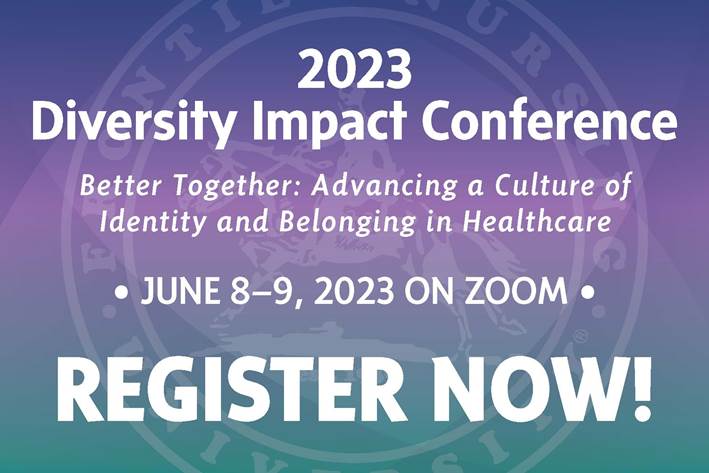
Frontier-Nursing-1Versailles, Ky. – On June 8-9, 2023, Frontier Nursing University (FNU) will hold its annual Diversity Impact Conference. The Diversity Impact Conference brings together renowned thought leaders and speakers to increase awareness of the importance of diversity, equity, and inclusion (DEI) in the healthcare workforce, particularly for those working in underserved and rural communities. This year, for the first time, the conference will be available for attendees outside of FNU.
“We are extremely excited about the 2023 Diversity Impact Conference,” said FNU Chief Diversity and Inclusion Officer Dr. Paula Alexander-Delpech, Ph.D., PMHNP-BC, APRN. “The Conference gets better each and every year, and we are putting the finishing touches on the plan for this year’s sessions. We are most excited, however, about being able to include more attendees this year. As we grow this important event, we want to invite leaders and students from some of our area universities to join us. This event is all about collaboration, learning, and growing. I’m confident that it will benefit any university, department, or individual.”

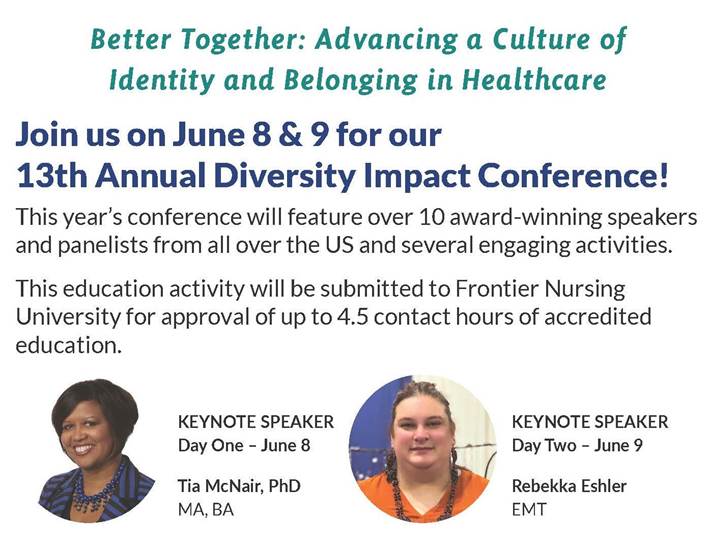
The 2023 Diversity Impact Conference will be conducted via Zoom. The theme of this year’s conference is “Better Together: Advancing a Culture of Identity and Belonging in Healthcare.” The two-day event will feature keynote presentations on both days from nationally recognized leaders in diversity, equity, and inclusion. Additional sessions will include panel discussions, breakout sessions, and time for reflection.

The opening keynote address will be given by Dr. Tia Brown McNair, Vice President of the Office of Diversity, Equity, and Student Success and Executive Director for the Truth, Racial Healing, and Transformation (TRHT) Campus Centers at the American Association of Colleges and Universities (AAC&U) in Washington, D.C. On the second day of the conference, the keynote speaker will be Rebekka Eshler, National President of the Transgender American Veterans Association in Washington, D.C.  All speaker bios and the full conference schedule can be found at https://frontier.edu/diversity-impact/

The learning outcomes attendees can expect to take away from the Diversity Impact Conference include:

  • Identify specific strategies to create a culture of belonging amongst peers and the larger community
  • Discuss the causes behind healthcare disparities and their effect on creating a culture of belonging
  • Reflect on ways to effectively engage in spaces to promote diversity in identity
  • Practice ways to build collaborative communities

Students attending any institution can register for the conference for free. All others can register at the registration price of $99 until the day before the event. For more information about the 2023 Diversity Impact Conference and to register, please visit https://frontier.edu/diversity-impact/.

#####

About Frontier Nursing University:

The mission of Frontier Nursing University is to provide accessible nurse-midwifery and nurse practitioner education that integrates the principles of diversity, equity, and inclusion. We transform healthcare by preparing innovative, ethical, compassionate, and entrepreneurial leaders to work with all people with an emphasis on rural and underserved communities. FNU offers graduate Nurse-Midwifery and Nurse-Practitioner distance education programs that can be pursued full- or part-time with the student’s home community serving as the classroom. Degrees and options offered include Doctor of Nursing Practice (DNP), Master of Science in Nursing (MSN), or Post-Graduate Certificates. In 2021 and 2022, Frontier was named a “Great College to Work For” by the Great Colleges to Work For® program. To learn more about FNU and the programs and degrees offered, please visit Frontier.edu.

image001-May-16-2023-02-16-40-9587-PM

image002


Topics: nursing schools, School of Nursing, student nurse, nursing student, nursing students, nursing school, Frontier Nursing University, diversity, inclusion, health equity, Diversity and Inclusion, student nurses, DEI, Diversity, Equity and Inclusion, diversity equity inclusion, Diversity Impact conference, conference

Switching Careers To Nursing

Posted by Erica Bettencourt

Thu, Jan 05, 2023 @ 04:07 PM

GettyImages-1287395441Thinking about changing careers? At any stage in life, Nursing is a great choice because Nurses are always in demand. It's a challenging, but rewarding field and previous education can help you become a Nurse faster.

"I'm a second career Nurse. What's wonderful about Nursing, is that it's very accessible after you've already been to school or college for another type of degree," Telemetry Nurse, Victoria told Johnson and Johnson

If you already have a Bachelor’s degree in any field, an accelerated Bachelor of Science in Nursing (ABSN) program is the quickest route. It usually takes less than 2 years. If you don't have a prior Bachelor’s degree, you can become a Registered Nurse (RN) with an Associate’s Degree in Nursing (ADN) or you can enter the workforce even quicker by becoming a Licensed Practical Nurse (LPN) or Licensed Vocational Nurse (LVN). 

After you earn your Nursing degree, you’ll be eligible to take the National Council Licensure Examination (NCLEX), which is administered by the National Council of State Boards of Nursing (NCSBN).

There are two of the NCLEX exam: The NCLEX-RN is a computerized exam required by all state boards of Nursing to qualify for an RN license. T
he NCLEX-PN is required to practice as an LPN.

After you pass the NCLEX, you must apply to your state board of Nursing for a license to practice.

If you're asking yourself, "Am I too old to become a Nurse?" The answer is no, it's never too late to join  the Nursing workforce. According to the NCSBN, the median age of working Registered Nurses is 52 years old. 

It's also important to remember this point by Indeed, your career length doesn't reduce the impact you may bring to the unit once you work as a Nurse. Your contribution makes a huge difference regardless of how long you can be active in the field.

"If you are a baby boomer or Gen X, there’s a place in Nursing for you. Your past work experience, dedication and passion are all needed resources within the healthcare arena. As Uncle Sam once said, “We Want You!," wrote Judy McDaniel, RN, MSN in a Nurse.com article.

According to The Department of Labor, The U.S. Bureau of Labor Statistics projects that more than 275,000 additional Nurses are needed from 2020 to 2030, and that employment opportunities for Nurses will grow at 9%, faster than all other occupations from 2016 through 2026.

This high demand is due to a variety of factors such as an increase in chronic conditions, an aging population and a stronger emphasis on preventative care.

If you have anxiety about being a new Nurse, consider one of the most important concepts taught in Nursing school, the “5 C’s” of caring: 

Commitment, Conscience, Competence, Compassion, and Confidence

Learning and adapting these concepts will allow you to provide better care and will improve the relationships you have with your patients as well as co-workers.

If you're interested in learning more about different Nursing Specialties, Click Here! 

Topics: nursing schools, nursing school, nursing program, nursing programs, nursing career, nursing jobs, nursing opportunities, nursing practice, changing careers, nursing field

Nursing Schools See Spike In Applicants Since Pandemic

Posted by Erica Bettencourt

Fri, Jul 17, 2020 @ 03:40 PM

BSN

One positive thing to come out of the COVID-19 pandemic is the renewed appreciation for healthcare workers, particularly Nurses. This appreciation is leading to an increase in Nursing school applications.

Donna Havens, PhD, RN, FAAN, Dean of Nursing at Villanova University M. Louise Fitzpatrick College said, “For the first time in my career, which has been a long one, folks truly get what Nurses do and they see how important and rewarding a career it is. Some would say Nurses are the glue, especially in hospitals and healthcare organizations." 

Havens believes another reason for the uptick in applications is from the record unemployment that has resulted from the pandemic. People in struggling occupations may look to Nursing as a rewarding and stable profession. 

Widener University spokeswoman Emily A Barrett said, "Historically speaking, economic downturns translate to an increase in Nursing programs due to industry stability and growth, which is projected to rise 15 percent by 2026 according to the U.S. Bureau of Labor Statistics."

Sandra Russo, Chair and Director of the Nursing program at Touro College in New York said, "This year, I have 20 students on a waiting list to get into my program, so the demand is much higher."

According to US News, the number of applications to Regis College's on-ground and online Nurse Practitioner programs are currently 10% to 15% higher than normal. 

Kevin Finn, Dean of Colby-Sawyer School of Nursing and Public Health said, the one thing he sees in common on the applications is a desire to help. 

The incoming Nursing class is 34% larger than last fall's. The college will have 90 students enrolled in its Nursing program in September, an increase from 62 students last year.

The University of Kansas School of Nursing said it’s currently at capacity on applications. In fact, they’ve increased their Salina branch because of so many people who now want to be a Nurse.

Nurses are in demand. Getting into Nursing school was already extremely competitive before the pandemic. Nursing schools may become even more selective with the increase in applications. Future Nurses should focus on boosting their credentials. 

New Call-to-action

Topics: nursing schools, nursing school, nursing programs, nursing school applications, applying to nursing school

Nursing Schools Go Virtual During COVID-19 Pandemic

Posted by Erica Bettencourt

Fri, May 29, 2020 @ 12:44 PM

virtualclasses

Nursing schools all over the country are switching from traditional clinical studies to virtual simulations. Colleges are offering online clinicals in several different ways.  

There is no national governing body recommending what each program does since Nursing education programs are approved by each state’s governing board.

The Society for Simulation in Healthcare (SSH) and the International Nursing Association of Clinical Simulation and Learning (INACSL) encouraged that, “regulatory bodies and policymakers demonstrate flexibility by allowing the replacement of clinical hours usually completed in a healthcare setting with that of virtually simulated experiences.”

Some students interact with avatars while others use unfolding case studies in which actors play out different scenarios, said Patty Gagliano, Indian River State College Assistant Dean of Nursing.  

Angela Ramos, second-year Nursing student at Indian River, is completing this semester's clinicals by passing medications to her patients through an online simulation platform, v-STEM. 

Most states in the United States allow up to 25% of clinical hours to be simulation-based and some states permit over 50%.

In Florida, the state has relaxed limits on the percentage of clinical hours that can be done through simulations, with programs now able to go up to 50% or more, said Cynthia Cummings, associate professor at the University of North Florida.

Georgia Gwinnett College is using two simulator programs that allows students to work together in online scenarios mirroring what they’d be doing in person, once they are Registered Nurses.

“Once you start, it’s just like going to the hospital,” said Desi Kennedy, a Nursing student set to graduate this month. “We have to give reports on four different patients. We break off into groups and decide what our priorities should be and how we should delegate certain tasks. We have huddle sessions about our patients. Those situations are really realistic, things can change really fast.”

Not all institutions are following the virtual trend. Kirkwood Community College in Cedar Rapids, Iowa have continued with in-person clinicals.

College officials opted instead to reduce the number of clinical hours students in the final semester would complete, said Kathryn J. Dolter, Dean of Nursing at the college. 

While there's "definitely a place for simulations" and what most schools are doing now is helpful, the simulations don't take the place of being with patients, Nurses and Doctors, said Cindy Dawson, Chief Nurse Executive and Associate Director at University of Iowa Hospitals and Clinics.

Donna Meyer, Chief executive of the Organization for Associate Degree Nursing said, "Simulations can be helpful to the education process and even stimulate a student’s critical thinking. Plus, virtual simulations are very structured. Faculty want their students to have strong outcomes, so the simulations are still very stringent.”

A virtual connection for Nursing students is crucial for continuing education and skill development during a pandemic.

Topics: nursing schools, virtual nursing classes

Top Nursing Schools In 2020 for Master's and DNP Programs

Posted by Erica Bettencourt

Wed, May 22, 2019 @ 11:09 AM

nursingschools-1U.S News ranked Nursing schools with the best Nursing Master's programs and Doctor of Nursing Practice programs for 2020.

According to the U.S News site, "Seven ranking indicators are used in both the master's and DNP ranking models. The seven common factors are the four research activity indicators, faculty credentials, the percentage of faculty members with important achievements, and faculty participation in Nursing practice. The other seven indicators in each ranking use measures that are specific to each degree type." To learn more about the ranking system click here.

Best Nursing Schools: Master's

Johns Hopkins University

Duke University

University of Pennsylvania

Emory University

Columbia University

University of North Carolina--Chapel Hill

Yale University

Ohio State University

Rush University

University of Michigan--Ann Arbor

Vanderbilt University

New York University (Meyers)

University of Maryland--Baltimore

University of Pittsburgh

University of Washington

Case Western Reserve University

University of Illinois--Chicago

University of Alabama--Birmingham

University of California--San Francisco

University of California--Los Angeles

For full list click here

Best Nursing Schools: Doctor of Nursing Practice

Johns Hopkins University

Duke University

Rush University

University of Washington

Vanderbilt University

University of Maryland--Baltimore

University of Illinois--Chicago

Yale University

Columbia University

Emory University

University of North Carolina--Chapel Hill

University of Pittsburgh

Case Western Reserve University

Medical University of South Carolina

University of Michigan--Ann Arbor

University of Alabama--Birmingham

University of Iowa

University of Minnesota--Twin Cities

Ohio State University

Rutgers University--Newark

For full list click here

Best Online Master's in Nursing Programs

Johns Hopkins University

Ohio State University

St. Xavier University

Rush University

University of Colorado

Duke University

George Washington University

Medical University of South Carolina

University of South Carolina

The Catholic University of America

University of Cincinnati

University of Alabama

Ball State University

University of North Carolina--Greensboro

Stony Brook University--SUNY

University of Texas Medical Branch--Galveston

Michigan State University

University of Memphis

Oregon Health and Science University

University of Missouri--Kansas City

For full list click here

Topics: nursing schools, nursing school

We'll Need 1 Million New Nurses By 2020

Posted by Erica Bettencourt

Mon, Jul 06, 2015 @ 02:03 PM

nurses resized 600

Nursing schools have major funding gaps. Foundations and charity groups can't make those ends meet. Another source of income may come from Nurse entrepeneurs. Some nursing schools and business communities are teaming up to develop healthcare technology, which in turn will help fill the funding gaps needed to acquire more nurses for our future.

Americans are applying to nursing school in record numbers. Unfortunately, the only thing many of the applicants end up nursing is a bruised ego.

In 2012, U.S. nursing schools rejected more than 80,000 qualified applicants. It's not as if the schools didn't want to admit them. Rather, they don't have enough faculty -- especially nurses with doctorates -- to teach more students.

That's a problem, as the United States will need 1 million new nurses by 2020.

At many nursing schools, tuition and grants are insufficient to cover the costs of hiring additional nurses with doctorates. To generate the cash they need to solve that problem -- and narrow the looming shortage of nurses -- schools should consider expanding beyond teaching and into entrepreneurship.

Nurses with doctorates are possibly the most versatile cogs in the U.S. health care system. They conduct research, do clinical work, and teach aspiring nurses. As researchers, these nurses examine the science and practice of nursing. Their work often combines the scientific elements of health care research with the more practical side of patient care.

This research can lead to new methods of pain management or medical devices such as the StethoClean, a self-cleaning stethoscope that prevents germs from being transferred among patients. It was invented by a nurse.

Because they understand the science and the practice of the profession, nurses with doctorates are invaluable resources for students. That's why the American Association of Colleges of Nursing recommends that all teaching faculty at nursing schools hold doctoral degrees.

Unfortunately, only about 1 percent of nurses in the United States have a doctorate, and that's not enough. More often, though, it's because of the significantly higher salaries they stand to earn outside academia.

Philanthropic groups are trying to help fill this funding gap. The Robert Wood Johnson Foundation, for example, has invested $20 million to help pay for nurses seeking doctorates across the country. But charitable gifts alone won't cut it. Nursing schools need another source of income. They just might find it by deputizing their faculty as health care entrepreneurs.

Nurses with doctorates are uniquely positioned to develop new health care technology. Whether they're administering medicines, utilizing medical devices or inputting data into the latest computer program adopted by hospitals, they have more hands-on experience with health care technology than anyone else in the system. To turn that technological aptitude into revenue, though, nursing schools have to partner with the business community.

Some schools are doing so. At the University of Utah, for instance, our Center for Medical Innovation provides seed funding for faculty members developing health care technology. It then links the innovators with business experts who can help them produce and market their technology.

In exchange, the university receives a share of the profits from intellectual property that is developed. It can then use the revenues to hire more nurses.

Other schools have adopted similar strategies. In March, the Midwest University HealthTech Showcase brought investors and industry professionals together to check out 50 early-stage health care start-ups at nine Midwestern colleges.

The young tech firms showed inventions ranging from gesture recognition software for smartphones to small-molecule drugs for post-traumatic stress disorder.

That's the sort of platform where inventions from nurses with doctorates can shine. 

To solve our nation's impending shortage of nurses, universities will need to get creative. Empowering nursing faculty members to become entrepreneurs can give schools the funding they need to educate the next generation of nurses.

Contributor: Patricia Morton

www.newsday.com 

Topics: nursing schools, nursing students, nurses, doctorates

Recent Jobs

Article or Blog Submissions

If you are interested in submitting content for our Blog, please ensure it fits the criteria below:
  • Relevant information for Nurses
  • Does NOT promote a product
  • Informative about Diversity, Inclusion & Cultural Competence

Agreement to publish on our DiversityNursing.com Blog is at our sole discretion.

Thank you

Subscribe to Email our eNewsletter

Recent Posts

Posts by Topic

see all