
Something Powerful

Tell The Reader More

The headline and subheader tells us what you're offering, and the form header closes the deal. Over here you can explain why your offer is so great it's worth filling out a form for.

Remember:

  • Bullets are great
  • For spelling out benefits and
  • Turning visitors into leads.

DiversityNursing Blog

10 Things I Wish I Knew Before I Became an Emergency Room Nurse

Posted by Pat Magrath

Wed, Dec 14, 2016 @ 12:37 PM

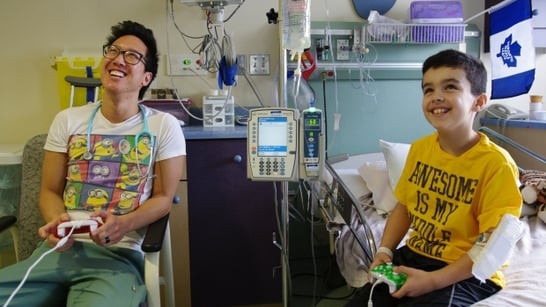
nurse-male.jpgIf you’re an Emergency Room Nurse, you may have some things to add to this list. If you’re in Nursing school or considering changing your specialty to ER, this information may be helpful to you. 

As a recent patient in the ER, I was amazed at the composure of the ER Nurses and the way they handled the chaos around them. While in the ER, there was an individual constantly complaining about how long he had to wait to be seen. Every Nurse was kind to him even though he was annoying everyone else waiting to be seen. With everything going on around them, I saw that every Nurse was professional and focused. Emergency rooms couldn’t exist without the expertise, professionalism, attention to detail, and compassion of the Nurses in the ER department.

1. Unlike most specialists, you need to know how to treat people of all ages and needs. Emergency nursing is considered a nursing specialty, but we’re also generalists. We take care of children and the elderly, pregnant patients and psychiatric patients, patients with special needs — you name it, we do it. It’s essential to regularly brush up on medical information and keep current in your continuing education, because you have to be prepared for any kind of patient to walk through the door.

2. Deciding who to treat first is really, really hard. We do get the stereotypical “emergency” cases — heart attacks or trauma victims — but we also see patients who are not able to get care from a primary care physician. A triage nurse will do an “across-the-room survey” to see who needs to be seen immediately and who can wait a little longer. In most emergency departments, only experienced nurses [with] advances certifications perform triage.

3. Multitasking is essential. You need to think fast on your feet, because you never know what’s you’re going to be asked to do next. One minute, you might be drawing blood or starting IVs; next, you’ll be checking on someone’s vital signs; then you might have to perform CPR on someone. Fortunately, there are many safety mechanisms in place to catch potential errors. For example, before we give a patient medication, we scan both the patient's ID band and the medications to make sure it’s the correct one, [and] we’ll do a targeted medical history, and review current medications and allergies to make sure there are no problems.

4. It’s way more work than it looks like on paper. Traditionally, nurses work 12-hour shifts, three shifts a week. It’s less than a 40-hour workweek, but it’s still exhausting: There’s virtually no downtime and you’re physically on your feet, running around during the entire shift. I wear a FitBit and I can easily put on 5 miles in a single day. In my institution, we also have on-call times, so you have to sign up for so many hours of on-call every six weeks — beyond your regular shifts — and be prepared to go into work at a moment’s notice.

5. You’re a nurse no matter where you are, even when you’re off the clock.When people know you’re a nurse, everyone wants to know if you can take a look at their rash or help them heal a cut or tell them how to get over a cold. A couple weeks ago, I was on an airplane and wound up taking care of a passenger who was having difficulty breathing after the flight attendants asked if there was a medical professional on board.

6. You will become fanatical about your loved ones' safety. I’ve seen a lot of things come through the ER doors, and a lot of injuries could’ve been prevented. For instance, we treat people who were in car crashes but didn’t have their seatbelts on, or children who were not in their car seats, or bicyclists and motorcyclists who weren’t wearing helmets. All of those injuries can be prevented.

7. Emergency departments don’t always hire nurses straight out of school. The reason is that new nurses take upward of six months to get oriented, so that basically means six months of training before a brand new nurse can start working. Some ER nurses start off in intensive care, telemetry, or maternal child health to gain experience before applying to work in the emergency department. Another way to get a foot in the door is to start as an ER department tech, which offers on-the-job training and can give you the experience you need to be an ER nurse. Some nursing students also do a preceptorship, where you can shadow a nurse for a few months while you’re still in school. I’ve taken on students for preceptorships and several of them have been hired in the end, so it’s a good way to make connections and prove you can do the job.

8. Sometimes, patients will treat you like a punching bag. There’s a lot of what we call “violent verbal abuse” in our department. Patients might call you names, or take out their frustrations by yelling at you. I think everybody just has to put on their armor before coming to work but it does affect you. It helps to be part of a professional association where you can vent to other nurses at the end of the day, or just talk it out with somebody who understands the environment.

9. You will have to learn how to deal with death. These days, especially with medical technology, we’re saving more and more people due to the advances in healthcare. But you will also see the cardiac arrest who can’t be saved, or the person who has such bad trauma that they bleed out. Death is part of the territory but nothing can really prepare you to watch one of your patients die. The hardest cases are when the patient is young. When you see something really upsetting, that’s where you lean on your network of other nurses. It’s so helpful to talk about what happened with someone else who understands.

10. Just being there with a patient, or patient’s family, can be healing. Most people, when they come to the emergency department, it’s not a planned visit. Patients and their families are dealing with a lot of anxiety and stress, and we have the opportunity to be there when people are most vulnerable. Just being there, holding their hand — that can go a long way.

sign up for newsletter

Topics: emergency room, emergency room nurse

Nurse Delivers Baby On Plane

Posted by Erica Bettencourt

Thu, Dec 08, 2016 @ 03:13 PM

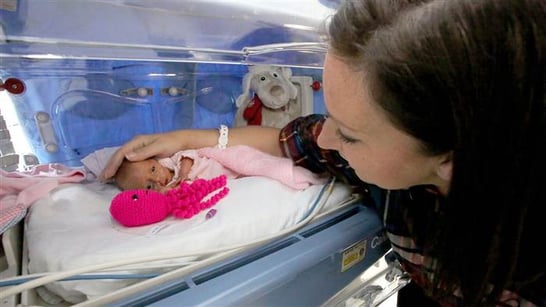
photos.medleyphoto.12439623.jpgThere was a big tiny surprise on a flight leaving Philadelphia. A woman's water broke and luckily a Nurse of 40 years, jumped into action. You might be wondering how the pregnant woman got clearance to fly. Turns out she was only 26 weeks pregnant. The baby, ironically named Jet, was a miracle delivery and is still in the Intensive Care Unit.
 
I can only imagine the panic she was facing on that plane and how thankful she must be for Nurse Bledsoe. The Nurse knew she had to help. Bledsoe said, "I believe that God puts you where you need to be." Have you ever been in the right place at the right time and able to be of assistance in saving a life?

An Orlando nurse who helped deliver a premature baby on a Southwest Airlines flight said she didn’t think twice about jumping in to help.

Baby “Jet” was born 14 weeks early on Sunday and remains in the Intensive Care Unit.

Loretta Bledose works on the business side at Orlando Health, but she was a nurse for 40 years.

That experience was crucial on her way home from a wedding in Philadelphia when a woman went into labor on her flight.

“She said, ‘My water broke. I’m pregnant. My water broke.’ I said, ‘How pregnant are you?’ She said, ’26 weeks.’ I said, ‘Oh, my God,’” said Bledose.

A flight attendant handed Bledose some gloves, and minutes later, the baby was born.

“There was a bulge there and I put my hands down and eased the baby out. She had a little two pound baby,” said Bledose.

A doctor on the plane also helped.

The baby wasn’t due until March 8 and had been cleared to fly by her doctor.

The mother is a nurse at Parrish Medical Center in Titusville, and Bledose said she remained calm throughout the ordeal.

“She kept apologizing, and I said, ‘Honey, this is out of your control,’” said Bledose.  

Bledose held the tiny baby in a blanket as the pilot diverted the plane to Charleston, South Carolina.

“I just kept praying, and every breath, I just kept saying, ‘Keep doing it baby, keep doing it,’” said Bledose.

When it was time for landing, Bledose was on her knees, holding the baby tight.

“I was just hanging on to mom and baby, and I said, ‘Just land, and we’ll be OK,’ and we were,” Bledose said.

The mother and baby were rushed to the hospital. Bledose continued on to Orlando, thankful she played in a role in what she calls a miracle.

“I believe that God puts you where you need to be. I truly believe that,” Bledose said. 

 sign up for newsletter

Topics: premature birth, gives birth on a plane, emergency delivery

Macro Trends in Nursing 2016 [Infographic]

Posted by Pat Magrath

Tue, Dec 06, 2016 @ 02:54 PM

emerging_trends_and_driving_forces_in_nursing_education.jpgIf you’ve been thinking about continuing your education, you’ll find many of your colleagues are too. This article talks about the importance and trend to keep learning in the Nursing field. 
 
Turns out, the way students are being taught is changing and it may be different than how you were taught years ago.  Read on to learn more.
 
With the end of 2016 quickly approaching, it’s important to look ahead to the future trends happening in the nursing profession. More and more, nurses are going back to school to earn higher degrees, but why? "Life-long learning keeps nurses up-to-date on the advances in practice and can help them critically think more thoroughly because they have more evidence and information to inform their practice decisions,” explains our Chief Nurse, Anne Dabrow Woods DNP RN CRNP ANP-BC AGACNP-BC FAAN.

Whether you’re a nurse with a diploma or associate’s degree contemplating achieving your BSN, or you’re looking to pursue an advanced degree in nursing, you’re not alone. According to a 2014 survey by the American Association of Colleges of Nursing (AACN), there’s been a “4.2% increase in students in entry-level baccalaureate programs (BSN) and a 10.4% increase in ‘RN-to-BSN’ programs for registered nurses looking to build on their initial education at the associate degree or diploma level. In graduate schools, student enrollment increased by 6.6% in master’s programs and by 3.2% and 26.2% in research-focused and practice-focused doctoral programs, respectively.”

With this new shift to lifelong learning in nursing, educators are adapting the way to they teach their students. “When we were [originally] taught how to educate students,” Woods says, “we were taught to sit them in a classroom and to lecture to them. That is not reality anymore today. What we’ve seen is a whole flip of the classroom so that the students or nurses…read, learn, and then come together and they discuss how to actually apply the principles that they’ve learned. That’s called the ‘flipped classroom,’ and that is what we are going to be using from now on.” 

To discover more about the flipped classroom and other changes in lifelong learning in nursing, utilize this handy infographic. 
 
macrotrend-3-infographic_lifelong-learning-in-nursing.png
If you have any questions regarding this article or anything else, feel free to ask one of our Nurse Leaders by clicking below!
Click Here To Ask Question

New Call-to-action

Topics: nursing trends

Over The Last 10 Years Violence Against Nurses Has Increased

Posted by Pat Magrath

Mon, Dec 05, 2016 @ 02:25 PM

636011780387486816236252967_healthcare violence 2.pngDo you feel safe at work? I hope you do 100% of the time. If you don’t, this article focuses on violence happening against healthcare staff from their patients. Nationwide safety standards are being considered. Some states and healthcare systems have adopted their own policies and safety training. 

Would you like to share your experience with our DiversityNursing.com community? Do you have some helpful advice? Your input is appreciated. Thank you.

Here’s an alarming statistic: Around one in four nurses has been physically attacked at work in the last year. Patients often kick, scratch, and grab them; in rare cases even kill them. In fact, there are nearly as many violent injuries in the healthcare industry as there are in all other industries combined. Healthcare workers make up 9 percent of the workforce.

There are currently no federal rules mandating that hospitals attempt to protect nurses from violence in the workplace, though some states have passed them on their own. State-specific measures include requirements that hospitals develop violence-prevention programs, such as teaching de-escalation techniques, and increased penalties for people convicted of assaulting healthcare workers. In October, California passed the toughest guidelines in the country, obligating healthcare employers to develop tailored violence-prevention plans for each workplace with employees’ input. But the problem has gotten so bad that the U.S. Department of Labor is considering setting nationwide workplace-safety standards for hospitals in order to prevent this kind of abuse.

Patients with dementia or Alzheimer’s and patients on drugs were the most likely to hurt nurses, according to one research study published last year in the Journal of Emergency Nursing. The study surveyed more than 700 registered nurses at a private hospital system in Virginia, and 76 percent said they had experienced physical or verbal abuse from patients and visitors in the previous 12 months. About 30 percent said they had been physically assaulted.

Working directly with patients in emotional and physical pain has always put healthcare workers at risk of violence. But  in the past decade or so, there has been a 110 percent spike in the rate of violent incidents reported against healthcare workers. The intensifying abuse has a lot to do with money: During the Great Recession, public and private hospitals began slashing budgets at the same time people were losing jobs—and their health insurance. That meant fewer nurses and security guards available to help when patients got out of control, and more people turning to hospitals instead of private practice for medical care since they couldn’t be turned away due to lack of insurance. States also cut billions of dollars in funding for preventative mental-health services, which likely had a significant effect on the frequency of violence against doctors and nurses. Psychiatric patients are increasingly seeking treatment in hospital emergency rooms, where staff are often unprepared to deal with violent outbursts. “This is creating volatile, unpredictable situations,” says Bonnie Castillo, a registered nurse and director of health and safety for National Nurses United, a labor group representing more than 160,000 nurses across the country. Her organization has been pushing states to pass laws to protect workers in the healthcare industry.

"A delirious patient kicked her so hard in the pelvis that she slammed into a glass wall and fell to the ground. She was two months pregnant."

There’s also a pervasive notion that dealing with unruly patients is just part of a nurse’s job. “We always feel discouraged from reporting it,” says Castillo. She said she was punished by a past employer for calling 9-1-1 after a patient attacked her. It’s not surprising then, that only 29 percent of the surveyed nurses who were physically attacked actually reported it to their supervisors. About 18 percent said they feared retaliation if they reported violence, and 20 percent said they didn’t report it because of the widespread perception that violence is a normal part of the job. A spokeswoman for the Inova Health System hospitals, where the nurses were surveyed, did not respond to a request to comment for this story, though it’s hardly a problem unique to one hospital.

Rose Parma, a registered nurse in California’s Central Valley, says nursing school did not prepare her for the brutality she would face in her career. Patients have spit on her, slapped her, and even threatened her life during the five years she has worked as a hospital nurse. But it reached an intolerable level about a year into her career, when a delirious patient kicked her so hard in the pelvis that she slammed into a glass wall and fell to the ground. She was two months pregnant. The pain was not as shocking as her supervisor’s response when she reported the incident. “The manager seemed so surprised and said ‘Has this never happened to you? Is this really the first time?’ As if it weren’t a big deal,” Parma says. The manager then told Parma she would see her the next day at work. “I literally thought I was going to die [during the attack], and they didn’t even offer me counseling.” (Her baby survived.)

As the Department of Labor considers implementing nationwide safety standards, individual hospitals are also taking their own measures. One hospital in Massachusetts offers self-defense classes for staff. Another in the state hosted a training exercise that simulated potentially violent hospital scenarios: gang violence in the emergency room, an outburst involving a mental-health patient, and an estranged ex-boyfriend in the maternity unit. But these types of precautionary measures are not the norm at hospitals across the United States, leaving many nurses unprepared for violent encounters. The lack of state or federal personal-safety standards as danger in the workplace grows may contribute to the shortage of nurses in the United States. When there are not enough nurses at hospitals, and those who are there feel stressed and unsafe, patients and staff all wind up suffering.

Have a question regarding workplace violence or maybe you have a general question? Click below to ask one of our Nurse Leaders!
Click Here To Ask Question

New Call-to-action

Topics: workplace violence, violent patients

Why Helping Someone While Off-Duty Can Get Complicated

Posted by Pat Magrath

Fri, Dec 02, 2016 @ 03:12 PM

help-1.jpgI think most Nurses would agree with the statement, "I don’t think I could not help someone." In your private life, I’m sure you’ve been in more than one situation where you jumped in to help someone in need without even thinking of a potential negative impact on you. You’re trained to help people.
 
But what if helping someone could potentially get you sued? Has it happened to you? Can you please share your experience with us so our readers can learn from your experience?

Decades ago, Ann Rhodes and her husband were coming home from a movie on New Year’s Eve. A car passed them and spun out of control into a field. One person was thrown from the vehicle, which then tragically rolled onto him.

“We stopped and got out of the car. One man was still in the vehicle, but he survived because he had his seat belt on. He had minor injuries,” Rhodes says.

When she got to the other man, he was still alive.  Rhodes, an RN with a master’s degree in nursing, took off her coat to put over him and held his hand. Moments later, he died.

“It was pretty awful, and we haven’t gone out on that holiday since. But I believe it is in most people’s instinct, especially a mother’s instinct, to protect others. I don’t think I could not help someone. Most people would stop – nurse or not – to see if they could help someone,” she says.

A Nurse’s Dilemma

Unfortunately, it’s not always as simple as just trying to help. The dilemma of whether or not to get involved while off-duty can be quite a difficult situation for nurses and other healthcare professionals to find themselves in.

Though the accident she witnessed affected her deeply, Rhodes also understands why a nurse might not stop to help.  After attempting to render aid, some nurses have actually been the subject of legal action.

“Being sued changes the way you think and the way you practice your profession,” she says. 

When The Law Is Not Enough

Every state has some form of the Good Samaritan law, which is designed to protect citizens from being sued or charged criminally for any injuries or death after they’ve stopped to help. The law is meant to encourage bystanders to render emergency assistance by covering everyone, no matter what their profession.  However, the law doesn’t provide a rescuer complete immunity.   

In a clinic or hospital setting, nurses are often protected through professional liability or Error and Omissions insurance. Rhodes discusses some of the aspects of that protection.

“There will be some exceptions, like if the nurse does something that is illegal or a violation of the law. Lots of policies have exclusions that include things like risky and unclear behavior, or an assault against a patient,” she says. “If they do perform a procedure, like grab a scalpel, and do something they are not trained to do, then that’s a different story.”

Similarly, the Good Samaritan law also does not cover you if you do something reckless. An example of recklessness would be starting to render aid, then stopping and leaving before the patient has been stabilized or other help has arrived.  

However, if you give a good faith effort given the circumstances, you have probably met your legal requirements and will likely be covered by the law.  However, that doesn’t mean you won’t get sued.

“People can file a lawsuit against anyone. The issue is whether they can collect,” Rhodes says. 

“Even if the lawsuit isn’t successful, it still takes an emotional toll on the person being sued. It will be costly too, even if the person being sued did everything right. They have to defend themselves.”

Enabling Bystander Response

The American Nurses Association (ANA) states on its website that registered nurses have consistently been reliable responders even when it puts their own safety or well-being at risk. 

Yet others struggle with the call to respond for a variety of reasons. 

These may include not having adequate support to meet the needs of the patient, concern about professional ethics, or legal protection while providing care.

Fortunately, the ANA and other national associations are partnering with government groups, employers, and others to help.  By implementing policies that enable registered nurses and others who provide care to respond without fear, it helps to ensure that the needs of the American public are met during any kind of disaster.

Assessing An Emergency Situation

So what should you do if you find yourself in an emergency situation?  

Carolyn Buppert, a healthcare attorney and author of the book “Nurse Practitioner’s Guide to Compensation and Qualify: How to Get Paid and Not Get Sued,” offers some sage advice.

“Nurses are not obligated to help,” she says. “In an emergency situation, it’s tough to think of precautions or liability.  But what should a nurse think about when she comes upon an individual or group of people who need medical attention outside of the workplace?”

Buppert recommends several questions to ask before rendering aid:

  • What does this person need?
  • How much of an emergency is this?
  • What do I have to offer?
  • Is anyone already helping?
  • Am I sufficiently educated and experienced to provide a useful service to this person?
  • What is the potential for physical danger to myself?
  • What are the chances that EMS will be here soon?
  • What is the likelihood that EMS will get here in time? 

“The law can get tricky in situations. For instance, if a nurse works for a hospital, and a discharged patient calls the nurse or approaches her or him in a shopping mall asking questions or requesting services or advice, the nurse should decline to provide nursing services or advice, and tell the patient to contact their physician’s office,” Buppert says.

“If the nurse gives advice and the advice is wrong, the patient suffers some adverse outcome, the nurse could be sued, and there is no Good Samaritan law that would protect the nurse,” she adds.

Preparing Before An Emergency

Not every form of  ‘helping’ is covered by Good Samaritan laws. Some states’ laws cover motor vehicle accidents but not all incidents or stranger’s needs on the street.

Buppert gives one last suggestion for all nurses. “My advice to nurses is to look up the Good Samaritan law in your state and see what protection it offers. Many nurses will help others, while off duty, without thinking of the possible consequences to themselves,” she says. “That’s admirable, but it doesn’t hurt to spend a few minutes looking at your state’s law to see what protections are available at a time when there is no emergency.”

Have a question about this or any general questions? Ask one of our Nurse Leaders!

Ask A Nurse

Click Here To Ask Question

Topics: emergency help, off duty, off the clock nursing

The Impact of Racism on Public Health

Posted by Nursing@USC Staff

Thu, Dec 01, 2016 @ 11:05 AM

53fc66d80604e.jpgThough discrimination exists in many forms, racial discrimination brings a unique set of implications that threaten the mental and physical health of patients and acts as a barrier to seeking care from medical professionals. Eliminating racism, therefore, is not just a concern for civil rights activists, but also for medical professionals.

Whether it’s the mere anticipation of discrimination, or violence as a manifestation of prejudice, racism has negative impacts on the mental and physical health of its victims, including “increased stress, depression, high blood pressure, cardiovascular disease, breast cancer, and mortality.” A study in the American Journal of Public Health found that perceived discrimination influences lifestyle decisions like overeating, internalizing aggression, and developing poor coping strategies that impact long-term health.

These lifestyle choices are part of a vicious cycle that can be influenced by social determinants of health, which are “conditions in one's environment — where people are born, live, work, learn, play, and worship — that have a huge impact on how healthy certain individuals and communities are or are not,” according to Healthy People 2020.

One study found that racism experienced by minority communities increased vulnerabilities to social and environmental factors that contribute to health, like access to health care and income level. The National Association of Social Workers found that these social determinants of health also include “poor health and health services, inadequate mental health services, low wages, high unemployment and underemployment, overrepresentation in prior populations, substandard housing, high school dropout rates, decreased access to higher education opportunities and other institutional maladies.”

In addition to affecting long-term health, social determinants can be barriers in seeking quality health care, and can lead to poorer outcomes after treatment. Many minorities cite racial discrimination as a primary barrier to seeking health care — particularly treatment for mental health issues. In a survey of adults who experienced an unmet need for mental health treatment in the past year, respondents across all racial group cited discrimination as a primary barrier to seeking treatment. Nearly a quarter of respondents said they anticipated negative stigmas surrounding treatment to impact relationships and employment circumstances.

As key resources in patients’ access to quality primary care, health care professionals, like Family Nurse Practitioners, must understand these implications of racial discrimination among other social determinants, and mitigate harmful, pervasive effects through opportunities like these:

  • Advocating for awareness: Nurses, as they interact with patients closely and regularly, can be advocates for patient needs, as they help identify key social determinants that leave patients vulnerable to the systemic racism. Public health advocates can also reach out to minority communities to help them understand the importance of physical and mental health.
  • Treating mental health as primary health: Integrating behavioral health care screening and treatment can help patients make better use of clinic visits and resources they might not otherwise be able to access. This increased access can reduce health disparities and increase effectiveness of treatment.
  • Promoting cultural competency: A diverse nursing staff can improve cultural competency — being conscious of social and cultural differences — and increase quality of care to underserved groups. By valuing diversity, nurses and other health professionals can take pivotal steps in ensuring access to care for an increasingly diverse patient population.

An integrated approach to mitigating discrimination can address both the causes and effects of its impact on accessing quality care. This means nurses should work together with other health practitioners, social workers and educators to understand and identify at-risk patients and appropriate strategies. Above all else, the goal is to help patients feel safe, understood and heard when seeking health care or treatment.

New Call-to-action

Topics: racism, public health

Nurse Writes Letter Apologizing to Patients After Being Diagnosed With Cancer

Posted by Erica Bettencourt

Tue, Nov 29, 2016 @ 03:35 PM

lindsay-norris-family-3-zoom-de32d1d9-fb60-4f8f-8238-8c2a3682dd31.jpgAs a Nurse you must be compassionate and sometimes you need to deliver hard news to a patient. No one can truly understand what someone goes through unless they have walked in the same shoes. Lindsay Norris had given heartbreaking news to patients many times as an Oncology Nurse but never knew exactly what her patients felt about the news until she got the news herself. She then wrote a letter addressed to every single one of her patients. See what this Nurse had to say.

“Dear every cancer patient I ever took care of, I’m sorry. I didn’t get it.” That is the title of the open letter oncology nurse Lindsay Norris wrote for her blog, Here Comes the Sun 927.

Norris penned the powerful piece on November 14, two months after she was diagnosed with stage III colorectal adenocarcinoma. “I didn’t get what it felt like to actually hear the words,” the 33-year-old from Olathe, Kansas, admitted in her note. “I didn’t get how hard the waiting is … I didn’t get how awkward it was to tell other people the news … I didn’t get the mood swings … I didn’t get that it hurts to be left out.”

“I didn’t get why you were always suspicious. You couldn’t help but wonder if [the doctors] all knew something you didn’t about your prognosis,” the mom of Harrison, 3, and Evelyn, 7 months, revealed. “We shared the percentages and stats with you — and that every cancer is different … but still — is there something more? Something they were protecting you from or just felt too bad to tell you? Logically, I know the answer to this but find myself with these feelings as well. I’m sorry. I didn’t get it.”

But Norris’ greatest regret? “I didn’t get how much you worried about your kids,” she wrote. “I should’ve talked to you more about them — and not just in terms of lifting restrictions or germs. You worried about how this was going to affect them. You worried about not being able to keep up with them or care for them properly on your bad days. You worried they’d be scarred and confused. You worried about leaving them. I’m sorry. I didn’t get it.”

The oncology nurse, who is currently undergoing oral chemotherapy and radiation, has been leaning on her husband of four years, Camden. “You felt thankful when your spouse would say, ‘Go get some rest and I’ll take care of the kids,’ but your heart hurt overhearing them play in the other room away from you, wondering if that was a glimpse into their future that didn’t have you in it,” Norris mused in her letter. “I’m sorry. I didn’t get it.”

Norris tells Us Weekly she’s learning to accept help — a topic she touched upon in her blog. “A few weeks ago I woke up feeling quite ill. This was still when I was insisting on bringing my kids to school myself,” she tells Us.“Halfway there I had to stop at a gas station to get sick. We went in the restroom, and we didn’t even make it in the door before I threw up. Of course my 3-year-old was concerned and asking a million questions. I felt pretty pathetic. I think it was just the first time I had to admit to myself that my treatment was affecting me.” Ever since then, Camden, 37, has been shuttling Harrison and Evelyn to school and daycare.

Meanwhile, Norris is focusing on what’s good. “Thanksgiving was a really nice day for me. Staying home with my little family with no plans felt amazing. Camden made a little turkey and stuffing for dinner,” she tells Us.“When I asked Harrison what he was thankful for, he answered, ‘God, my best friend Cooper, milk and my sissy.’ The future may not be promised, but when I look around, the view is beautiful.”

New Call-to-action

Topics: oncology nurse

Is Discrimination Bad for Your Health?

Posted by Nursing@USC Staff

Wed, Nov 16, 2016 @ 10:42 AM

discrimination_bad_for_health.jpgDiscrimination in the United States has historically cut a wide swath across a number of demographics, including race, gender, ethnicity, sexual orientation, age, disability and religion. Despite a major cultural and political shift through the implementation of the long overdue Civil Rights Act of 1964 and other efforts at fighting discrimination, we still see it today — particularly in the form of modern-day racism. According to the National Association of Social Workers (NASW), racism is “the ideology or practice through demonstrated power of perceiving the superiority of one group over others by reason of race, color, ethnicity, or cultural heritage.”

Though all discrimination is harmful, an examination of the effects of racism — the most commonly studied and cited form of discrimination — reveals implications for the mental and physical health of individuals and communities that can be applied to other types of discrimination. Racism, therefore, is not just a civil rights issue, but also a public health concern.

As key figures in addressing such consequences, health care professionals, such as Family Nurse Practitioners, must recognize the health implications involved and know the steps they can take to help stop discrimination and mitigate its negative outcomes.

Impact of Discrimination on Health

The NASW says racism results in “poor health and health services, inadequate mental health services, low wages, high unemployment and underemployment, overrepresentation in prior populations, substandard housing, high school dropout rates, decreased access to higher education opportunities and other institutional maladies.” Some of these factors can be classified as social determinants of health (SDOH), which have a major influence on health outcomes. According to Healthy People 2020, SDOHs are defined as “conditions in one's environment — where people are born, live, work, learn, play, and worship — that have a huge impact on how healthy certain individuals and communities are or are not.” 

In one study of the health effects of discrimination on black and white communities, SDOHs were defined as a critical factor, since populations that lack appropriate resources are affected the most: “On average, black adults typically experience more health risks in their social and personal environment than white adults (including higher poverty and lower-quality medical insurance), they may be especially vulnerable to negative health effects as a result of racial discrimination." 

There are a number of physical and mental health effects related to discrimination, including increased stress, depression, high blood pressure, cardiovascular disease, breast cancer, and mortality. According to a study published in the American Journal of Public Health, “Merely anticipating prejudice leads to both psychological and cardiovascular stress responses. These results are consistent with the conceptualization of anticipated discrimination as a stressor and suggest that vigilance for prejudice may be a contributing factor to racial/ethnic health disparities in the United States.” Additionally, discrimination has been found to impact lifestyle decisions that affect health long after the experience is over.

Communities at highest risk for discrimination are the same communities that are perpetually marginalized by the negative impact of SDOHs. In a 2013 Atlantic article titled “How Racism is Bad for Our Bodies,” writer Jason Silverstein points out that the cyclical effect of discrimination on health is what epidemiologist Nancy Krieger refers to as “embodied inequality,” which creates poor health outcomes that are often passed down through generations. This results in a vicious cycle where the sickest and poorest among us are more likely to remain sick and poor.

Solutions and Strategies

Health care professionals and policymakers can play a key role in curbing discrimination by supporting legislation and policies that address these issues, such as the U.S. Department of Health and Human Services (HHS) Action Plan to Reduce Racial and Ethnic Health Disparities. The U.S. Office of Minority Healthprovides a summary of this action plan, and serves as a “one-stop source for minority health literature, research and referrals for consumers, community organizations and health professionals.” Through use of such resources, and appropriate support networks, victims of discrimination can find the support they need to exercise their rights and end the various forms of discrimination they may be vulnerable to.

Additionally, it is essential that health care professionals work to better recognize the effects of discrimination by taking SDOHs into consideration as part of their approach to care, understanding which populationsmay be at greater risk for discrimination, screening for negative health outcomes that may be a direct result, and ensuring that discrimination is not occurring within their own practice settings. Providing access to necessary resources and additional support for these patients is critical.

Implications for FNPs

Family Nurse Practitioners are integral to comprehensive care for all patients, and serve as a key resource for those most vulnerable to discrimination’s negative effects on health. “At the University of Southern California Department of Nursing in the School of Social Work, we are teaching our students about the central importance of social determinants of health, with racism being a key determinant, in the health of individuals and families,” said Ellen Olshansky, Professor and Chair of Nursing at USC School of Social Work. Although the policy statement by the American Nurses Association, “Discrimination and Racism in Health Care,” dates to 1998, its principles are just as relevant today, addressing both the health care environment and the patients who are served:

ANA believes it is critically important for Americans to come to a shared understanding of the negative consequences of discrimination and racism which still pervades our society and be willing to take individual as well as collective actions to bring America closer to our ideal of equality and justice. Equality and justice must also extend to other minorities such as the aged and disabled. Health care that is individualized to the health practices and specific needs of each person and/or population group is vital to maintain and improve the health of all Americans.
New Call-to-action

Topics: racism, Race-Discrimination, public health

Breast-friendly, radiation-free alternative to mammograms in the works

Posted by Pat Magrath

Tue, Nov 15, 2016 @ 10:38 AM

Mammogram-hero.jpgMammograms, we know how barbaric and uncomfortable the procedure is for all of us. I often find myself thinking, there’s got to be a better way. Wouldn’t it be great if we had something that gives a better picture, doesn’t use radiation, and doesn’t flatten our breasts during the process? We’d all like to skip our mammograms entirely, but the prospect of early cancer detection keeps us going back year after year.
f08f51fe01cce526ba77fe35ebcd9ae2.jpg
Well, it looks like some progress is being made in the world using sound waves. Check out this article and let us know your thoughts.

Each year, millions of women undergo mammograms for early detection of possible breast cancer. It's an unpleasant procedure that uses X-rays. Researchers at TU Eindhoven are working on a 'breast-friendly' method, without radiation, that is more accurate and generates 3D rather than 2D images. They published their proof of concept earlier this month in the online journal Scientific Reports.

In the regular screening method the breast is squeezed tight between two plates in order to produce one or more good X-ray photos. Apart from being unpleasant, it is not without risk. The X-rays used can themselves be a contributor to the onset of cancer. Moreover, it is often unclear whether the anomaly found is malignant lesion or not. More than two-thirds of the cases where something worrying can be seen on the X-ray photos is a false-positive: after biopsies, they are not found to be cancer. This is why science is seeking alternatives.

Researchers at TU Eindhoven have now cleared a major scientific hurdle towards a new technology in which the patient lies on a table and the breast hangs freely in a bowl. Using special echography (inaudible sound waves) a 3D image is made of the breast. Any cancer is clearly identifiable on the generated images; the researchers therefore expect there to be many fewer false-positive results.

The new technology builds on the patient-friendly prostate cancer detection method developed at TU/e whereby the doctor injects the patient with harmless microbubbles. An echoscanner allows these bubbles to be precisely monitored as they flow through the blood vessels of the prostate. Since cancer growth is associated with the formation of chaotic microvessels, the presence and location of cancer become visible. This method works well for the prostate and this is now being widely tested in hospitals in the Netherlands, China and, soon, Germany. For breast cancer the method had not yet been suitable because the breast shows excessive movement and size for accurate imaging by standard echography.

Researchers Libertario Demi, Ruud van Sloun and Massimo Mischi have now developed a variant of the echography method that is suitable for breast investigation. The method is known as Dynamic Contrast Specific Ultrasound Tomography. Echography with microbubbles uses the fact that the bubbles will vibrate in the blood at the same frequency as the sound produced by the echoscanner, as well as at twice that frequency; the so-called second harmonic. By capturing the vibration, you know where the bubbles are located. But body tissue also generates harmonics, and that disturbs the observation.

For the new method the researchers are using a phenomenon that Mischi happened upon by chance and later investigated its properties together with Demi. They saw that the second harmonic was a little delayed by the gas bubbles. The researchers have now developed a new visualization method. The more bubbles are encountered by the sound on its route, the bigger the delay compared to the original sound. By measuring this delay, the researchers can thus localize the air bubbles and do so without any disturbance because the harmonic generated by the body tissue is not delayed, and is therefore discernible. This difference, however, can only be seen if the sound is captured on the other side. So this method is perfectly suited to organs that can be approached from two sides, like the breast.

The researchers are currently putting together an international, strong medical team to start performing preclinical studies. Application in practice is certainly ten or so years away, Mischi expects. Moreover, he forecasts that the technology that has been developed will probably not operate on a standalone basis but in combination with other methods, which will create a better visualization. One of the candidates for this elastography, a variant of echography whereby the difference in the rigidity of the tumor and healthy tissue can be used to detect cancer.

New Call-to-action

Topics: mammography, breast screening, mammograms

10 Tips To Help You Enjoy Your Holiday Nursing Shift

Posted by Pat Magrath

Mon, Nov 14, 2016 @ 04:19 PM

cee7b8dcb59575f069eae423085a3bc0.jpgThe holiday season is fast approaching and with that comes a lot of stress in both our personal and professional lives. No matter what holiday you celebrate, we hope it is a joyful and peaceful holiday for you and your family.
 
To help you deal with the holiday details, we found this article that offers some useful tips to help you enjoy the holidays. What works for you? Perhaps you’ve discovered something that you’d like to share.
 
As October comes to a close, we can feel the excitement and, at times, stress of the holidays approaching. While many people are out buying their last-minute Halloween costumes or planning their Thanksgiving menu, or even setting up their Christmas decorations (we know, early!), nurses are preparing for working their holiday shifts. 

Working over the holidays is a reality check for nurses. While other professionals get this time off to be with their loved ones, nurses are caring for their patients and working to ensure the safety of other people’s friends and family members. While it is an honor at any time to care for the sick or injured, we understand it can be especially difficult at the celebratory times of the year. 

To make these occurrences a tad easier, and even fun, here are 10 ways to make the most of your holiday nursing shift. 

1. Plan ahead
Start planning your holiday shifts way ahead of time. Coordinate with your loved ones on days to celebrate that work around your schedule. For instance, if you are working over Thanksgiving, plan to celebrate a day or two later. Speak with your manager about the best way to ensure you are there to cover your shift, but that you also have time built in for those holidays that are important to you. 

2. Ask for help
Do you normally do the bulk of the Christmas or Hanukkah cooking? Ask your family members to pitch in or organize a pot luck so everyone shares the labor. If you know you are scheduled to work over a holiday, know your limits and time constraints and ask those around you to assist in the holiday preparations.

3. Be prepared
If you are scheduled to work over certain holidays, be prepared to meet any holiday-related needs of patients. Be on the lookout for complications of diabetes and dehydration over Halloween and be sensitive to how costumes may interfere with your ability to care for a patient or how they may affect a patient, especially those with a mental illness. Be ready for cooking-related injuries, such as burns or cuts, around Thanksgiving. Pay extra attention to patients suffering from depression around Christmas and New Year’s Eve. If you know what to look for, you will feel more prepared when encountering these situations. 

4. Make your work space feel like home
With permission from your manager, decorate your work station over the holidays. Put up paper pumpkins and turkeys. String twinkle lights and set up a holiday tree or bush. Just be sure to be sensitive and inclusive of everyone’s holidays, not just your own. 

5. Organize a work party
Many times, your co-workers can feel like family. Take some time during a shift to celebrate with your team. Have everyone bring in their favorite holiday treat or consider exchanging small gifts. You may also consider planning a holiday party outside of your work setting. It’s nice to take the time out to blow off steam and enjoy your co-workers’ company. 

6. Celebrate when you can
Working over New Year’s Eve? Celebrate at a time that works for you. Start the countdown at 5am with the other nurses working alongside you. If you want to celebrate with family and friends, you can do the same – pick another day and/or time, adjust your clocks and watches and ring in the New Year accordingly. 

7. Be resourceful 
Make the most of your breaks during your shift. If able, Skype with friends and family, follow their photos on Facebook or Instagram, or ask someone to share videos of the holiday gatherings with you. Utilize available technology to stay as connected as possible. 

8. Be mindful
Be mindful that the patients are there for the holidays too. Try to lift their spirits by asking if they would like their room decorated or try speaking with them about happy holiday memories. You may be able to help accommodate visitors or help patients get in touch with family and friends. 

9. Know your limits
Too busy to decorate for your favorite holiday? Not enough time to go to the mall to buy gifts? Too stressed to cook your traditional holiday meals? Cut corners where you can; shop online, skip the decorating all together, order take-out or pick up prepared food from a local store. Determine what you can do without and compromise where you can. 

10. Focus on the positive
Depending on your work place, there may be benefits to working a holiday shift, such as extra pay or the next holiday off. During the holidays, you may also get to enjoy a slower work pace and a shorter commute. On top of that, you are in it together with your fellow nurses and your patients, who all are there to share the holiday with you.
 
New Call-to-action 

Topics: Holidays, holiday shifts, working holidays

Recent Jobs

Article or Blog Submissions

If you are interested in submitting content for our Blog, please ensure it fits the criteria below:
  • Relevant information for Nurses
  • Does NOT promote a product
  • Informative about Diversity, Inclusion & Cultural Competence

Agreement to publish on our DiversityNursing.com Blog is at our sole discretion.

Thank you

Subscribe to Email our eNewsletter

Recent Posts

Posts by Topic

see all