Something Powerful

Tell The Reader More

The headline and subheader tells us what you're offering, and the form header closes the deal. Over here you can explain why your offer is so great it's worth filling out a form for.

Remember:

  • Bullets are great
  • For spelling out benefits and
  • Turning visitors into leads.

DiversityNursing Blog

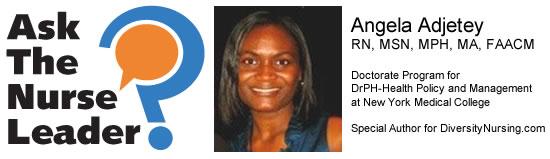
Erica Bettencourt

Content Manager and Social Media Specialist

Recent Posts

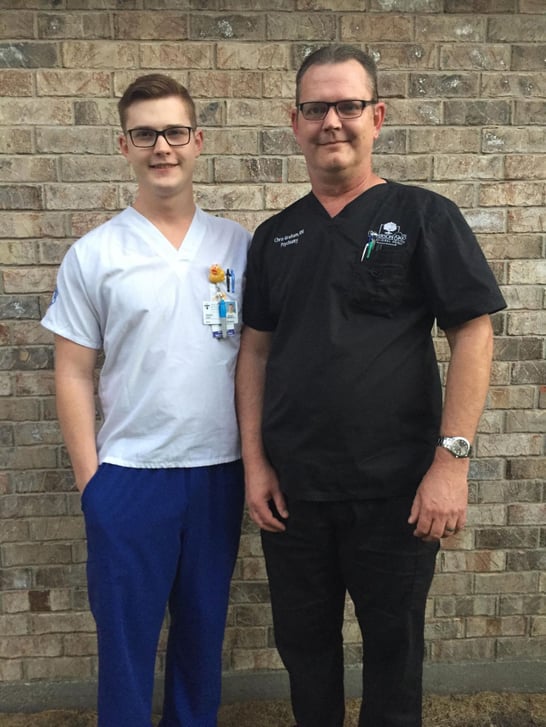
Meet The Father-Son Nursing Duo

Posted by Erica Bettencourt

Fri, Jan 06, 2017 @ 11:23 AM

fathersonnurses.jpg
There's an old saying, "If you love what you do, you never work a day in your life." Chris Graham was working a job he didn't love and decided it’s never too late to get a job that you do love. 
 
He wanted to become a Nurse. Somehow, he managed to get his Nursing degree with 4 children to take care of at home. One of those children followed in his father's footsteps and graduated from the same Nursing School. The legacy will continue as another one of Chris's kids has been accepted to Nursing school. What a wonderful role model Chris is for his family.

A strong connection with an anesthesiologist at the mechanic shop he worked in inspired Chris Graham to pursue nursing school, but little did he know that years later, he would inspire his son to do the same thing.

Graham, a 48-year-old resident of Baton Rouge, walked across the stage to graduate from Our Lady of the Lake College in 1999, and a few weeks ago, his second son, Stefin, accomplished the same feat when he received his diploma from the newly dubbed Franciscan Missionaries of Our Lady University.

Chris serves as the director of Nursing at Jefferson Oaks Behavioral Health, and Stefin has been hired to work in the intensive care unit at Our Lady of the Lake Hospital.

In 1995, Chris was working at BMW of North America as a mechanic, married to a schoolteacher and the proud father of two sons, but he knew that eventually he wanted to pursue another career path.

Although he didn’t know exactly which field he would pursue, Chris began taking prerequisite courses at night while working a 40-plus hour workweek at the mechanic shop.

It wasn’t until he struck up a relationship with a local anesthesiologist who became a regular at the shop that he decided to turn toward the medical field.

“I said, ‘Doc, I can’t go to nursing school with these kids,’ and he said, ‘Aw, yeah you can. Just put your mind to it.’ Long story short, I ended up registering at Our Lady of the Lake College, and in 1996, I took my first nursing class,” Chris said.

Being accepted into the program was only the first of many hurdles he had to overcome on the long road to graduation.

“Once I got accepted into nursing school, we had two more children,” said Chris. “My wife, Jeri, was a full-time teacher, and I quit working for BMW North America and put all my efforts into nursing school. At that point, I became a stay-at-home dad, and we went from having my six-digit salary to living on a teacher’s salary, which was tough with four kids and a house. Somehow, we got through it, though, and I love what I do.”

Chris’ hard work did not go unnoticed, since he was the first person to receive the Dr. John Beven Award for graduates who exemplify the art and science of nursing, and years later his second son, Stefin, chose to pursue the same career path.

Stefin said, “I was maybe 8 or 9 years old when my dad graduated from nursing school, and I didn’t realize what a big feat that was until I was older. He didn’t just have me, he was also taking care of my two younger brothers and my older brother, so he graduated nursing school with four kids.”

Although watching his dad was inspiring, for Stefin, the decision to pursue nursing was solidified while doing service hours as a high school senior.

Stefin said, “When I was in high school, I had to do service hours, and my dad helped me get those by bringing me with him to work. He worked in a surgery center, and I would go with him to see the patients. I loved seeing what he did as a nurse, and I felt like that was the type of trade I could enjoy and pursue.”

Growing up, Stefin always felt drawn toward caretaking roles, so the unit he chose to work on was a natural fit for him.

Stefin said, “I feel like I was always called to be a caregiver to other people, and my faith teaches me that in serving others we are served. About halfway through school, we did our ICU rotations, and I really fell in love with it. You get to take care of the most vulnerable patients who often can’t speak for themselves.”

The nursing legacy of the Graham family will be continued when the fourth Graham son, 18-year-old Austin, starts classes in the fall at Franciscan Missionaries of Our Lady University.

For Chris, seeing his sons follow in his footsteps is an honor unmatched by little else.

Chris said, “It makes you wonder: Did they mimic and learn from me, and did I help to encourage this somehow? I teach my children to go after their own aspirations, not what other people tell them to do, so it’s been humbling to see them pursue nursing.”

sign up for newsletter

Topics: nursing school, father and son Nurses

Robots Designed To Help Nurses, Not Replace Them

Posted by Erica Bettencourt

Tue, Jan 03, 2017 @ 03:47 PM

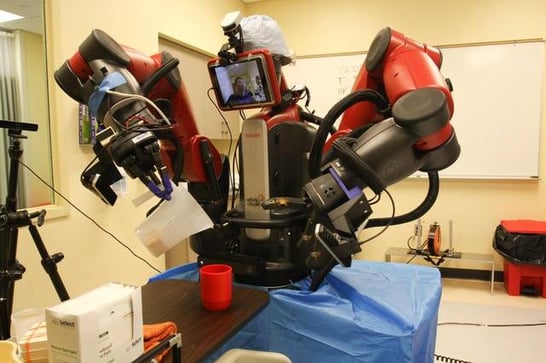
IMG_9931.jpgBy 2021, robots will have a growing presence in healthcare. That doesn't mean less Nursing positions, but more assistance and safety. Think of robots used to detonate bombs instead of sending in a human to do it. These robots would be dealing with high risk patients with infectious diseases. 
They can also help Nurses with lifting patients and heavy objects, and they can handle the staffing. Does this sound like a good idea to you? Would you feel comfortable implementing robotics into your work place? 

A grant from the National Science Foundation has led engineering and nursing students at Duke University to create a robotic “nurse” to assist human nurses, according to an article published in the News & Observer. The robots are being tested as “alternatives to human contact to diminish risks for providers,” who are caring for patients with infectious diseases.

“We are not trying to replace nurses,” Margie Molloy, an assistant nursing professor, said in the article, explaining they are trying to create a safer environment for healthcare providers.

The first-generation robot called “Trina” (Tele-Robotic Intelligent Nursing Assistant) can perform tasks, albeit clumsily at present, such as delivering a cup, a bowl, pills and a stethoscope to a patient. Its face is a computer screen on which an actual nurse’s face appears.

In the fall, students conducted a simulation with a fake patient using the remote-controlled robot, which has a price tag of $85,000.

Plans for the next generation of Trina include giving her a “more friendly and human-like appearance” and enabling her to collect and test fluids, the article stated.

“We need to establish a better interface with the human and the robot to make them work together and be more comfortable,” Jianqiao Li, engineering student, said in the article.

A Business Wire article stated that by 2021 robots will be a growing presence in the healthcare system, surpassing 10,000 units annually.

“More than 200 companies are already active in various aspects of the healthcare robotics market,” said principal analyst Wendell Chun, in the article. “These industry players are creating highly specialized devices for a wide range of applications, and the use cases will continue to expand as costs decline and healthcare providers recognize the early successes of robots in supporting high-quality care and a range of ancillary services.”

MIT has been teaching robots to assist nurses with scheduling. A robot can observe humans working on a labor and delivery floor and then formulate an efficient schedule for staff, according to the July 2016 MIT News article.

Nurses’ positive comments about the robot included that it would “allow for a more even dispersion of workload” and that it would be helpful to new nurses who are acclimating to their roles.

“A great potential of this technology is that good solutions can be spread more quickly to many hospitals and workplaces,” Dana Kulic, an associate professor of computer engineering at the University of Waterloo, said in the article. “For example, innovative improvements can be distributed rapidly from research hospitals to regional health centers.”

Another robot project funded by the NSF is developing robots to help nurses lift patients and heavy objects.

“The proposed Adaptive Robotic Nurse Assistants will navigate cluttered hospitals, while equipped with multimodal skin sensors that can anticipate nurse intent, automate mundane low-level tasks, but keep nurses in the decision loop,” according to an award abstract. “Modular and strong hardware will be deployed in reconfigurable platforms specially designed for nurse physical assistance.”

Related Article: A Robot Delivers Meds at Dana-Farber

sign up for newsletter

Topics: robotics, robot

A Nurse And A Gentleman

Posted by Erica Bettencourt

Wed, Dec 28, 2016 @ 12:54 PM

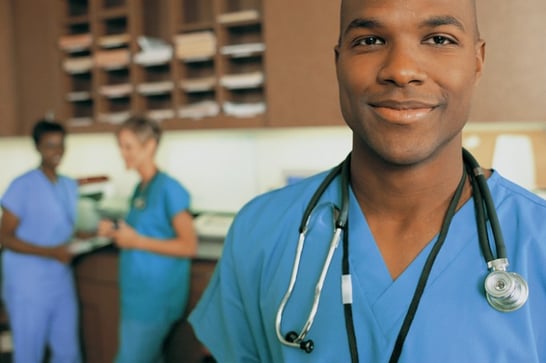
Male_Nurse1.jpgEducational systems should be increasing the diversity of its students to create a workforce that is prepared to meet the demands of diverse populations. Since the 70's there has been an increase of male Nurses by 200%. Stereotypes of professional gender rolls are being broken down.
 
The student-led group MEN, follows in the footsteps of AAMN the American Assembly for Men in Nursing. The group is open to all genders and their goals are to empower male Nursing students, promote awareness and cultural competence, and advocate growth and development. In doing so, MEN will help lead the change.
 
Download A Free Cultural Checklist

“It does not make a thing good, that it is remarkable that a woman should do it. Neither does it make a thing bad, which would have been good had a man done it ...”

— FLORENCE NIGHTINGALE, 1859

The preceding quote is the second-to-last sentence of Nightingale’s famous book. Her allusion to the equality between sexes looks as if it has been added as an afterthought. In the discussion about men in nursing, her ideas may seem portentous, but it is doubtful if she ever imagined that men would be infiltrating the field.

The number of male nurses and men enrolling in nursing programs are at all-time high. According to the US Census Bureau in 2013, the latest figures show that approximately 9.6% of nurses in 2011 are male compared with 2.7% in the 1970s—representing a more than 200% increase. At our College, about 10% of advanced practice students and 14% undergraduate students were male during the school years 2014 to 2016. Eight of the full-time faculty are male—or 11%. Nationwide, enrollment of men in entry-level nursing programs remains stable at about 15% since 2012. It is likely that these numbers will increase in the next decade as more media attention is given to the reality of nursing as a viable and rewarding profession for men and women alike.

Enter — MEN.

The student-led interest group MEN came about in 2009 when a group of male students sent out a call for anyone who identified as male to gather and brainstorm about establishing a student activity group.

In its by-laws, MEN adopted the objectives of the American Assembly for Men in Nursing (AAMN) as its core purpose. These goals include:

To empower male nursing students to be responsible for their holistic health and well-being in order to serve as role models in the community.

To promote awareness of health related issues affecting the male population by addressing their unique health challenges.

  • To promote cultural competence among all its members to recognize the male perspective of nursing.

  • To advocate for the growth and development of its members as leaders in nursing and in society through education, outreach, advocacy, and service.
 
Throughout each school year, MEN organizes and collaborates with other student groups to provide high quality extracurricular programming to not just meet its educational mission, but to promote comradery and mutual support among male students in the program. Some of the more recent events hosted by MEN include bike rides and indoor rock climbing, résumé writing and interviewing skills, men’s health awareness campaigns and fundraising, alumni networking, picnics, and presentations on various clinical topics of interest.

While the group’s purpose relates to men in the nursing profession, MEN is open to students of all genders, with some of its executive board members in the past being female. One significant outcome of the group is that several key MEN alumni established New York City Men in Nursing, an official chapter of AAMN.

The Future of Nursing: Leading Change, Advancing Health

While many health professions are becoming more gender-balanced, the nursing workforce has remained predominantly female. The impact of the increasing number of men entering nursing is still emerging and not yet fully understood. Other countries have long established policies to deal with instructional and practice variations based on religious restrictions. For example, in a nursing school in Oman, male students are not allowed in maternity wards. High-fidelity simulation offers male students the “hands-on” experience in labor and delivery.

One important consideration in the slowly increasing gender diversity in nursing education is for faculty to be aware of the well known gendered characteristics in learning, while keeping in mind that every individual is unique. Gendered differences is a potential topic for nursing education researchers.

Career Trajectories of Male Nursing Students

Hospitals remain the largest employer of all registered nurses, with 63.2% providing inpatient and outpatient care in a hospital setting. Staff nurse—or its equivalent—is the most common job title of RNs in the US. However, there is no comprehensive data on current career choices of male nurses. Older data indicated more men work at hospitals in proportion to the number of female RNs.

What is certain today is that the highest representation by men in all fields of nursing practice is in nurse anesthesia. The US Census Bureau reported that 41% of all Certified Registered Nurses Anesthetist (CRNAs) are males. An online survey by Hodes Research in 2005 reported that the top three specialties reported by men were critical (27%), emergency (23%), and medical/surgical (20%). Awareness of the trend of career trajectories and aspirations of male nurses has important implications for nursing education and clinical stakeholders.

A Nurse and a Gentleman

Males are collectively called gentlemen, yet the virtue of gentleness, as a social construct, is mostly associated with women. Perhaps, it is one of the many reasons why it is especially pleasing to see men exemplify gentleness in a nursing role. What male nurses can offer to nursing is to breakdown the stereotypes of professional gender roles. Compassion, courage, good faith, and other virtues are all universal, and can be found among male and female nurses. At NYU Meyers, we believe in these values and are glad to see a growing number of men living them personally and professionally. 

by Fidelindo Lim, DNP, CCRN, and Larry Slater, PhD, RN, CNE Clinical Assistant Professors

 
sign up for newsletter

Topics: male nurse, men in healthcare, men in nursing, male nurses

Surviving the Holidays

Posted by Erica Bettencourt

Mon, Dec 19, 2016 @ 03:45 PM

The Holidays are stressing meowt!.pngLife as a Nurse is hectic in general. Throw in the Holiday Season and now we're really talking high stress levels. Instead of growing sick of the chaotic season, wishing for it to be over, and trying to come up with a game plan, you could be the A-team of holly jolliness, and give yourself more time to spend with friends and family. 
 
Read below for a few helpful steps and tips to surviving the holidays.

For many nurses, the time between November and February tends to present times that could offer fun and stress relief. However, for the exact same reasons, stress can mount from various sources.

We look forward to seeing family. Cooking those once a year dishes, to share with others, can invite lifelong memories. Of course, juggling work into the mix is part of the everyday life of a nurse. Then time starts to meander through the calendar of various holidays. A churning stress starts to invade our peaceful thoughts of how events were meant to unfold.

Circumstances can create challenges. A nurse’s schedule is most likely already established before the holiday season arrives. Then reality happens. Family members may alter plans that interrupt a fluent strategy for what happens when. Speaking of schedules, as a nursing supervisor I recall many schedules that were constantly being adjusted depending on staffing needs and various circumstances.

Then that moment arrives. Exhausted and stressed from feeble attempts to micromanage potential new memories, you hear a still small voice in your head say, “I just cannot wait for the holidays to be over.”

Perhaps there may be a side step of planning that helps to keep things in perspective.

survival strategy could include the following:

  1. A calendar.
  2. Lists.
  3. Willingness to adjust and let go.
  4. Breathe.
  5. Appreciate moments as they happen.


It all starts with a willingness to be realistic. Planning for all meals, all favorite desserts, all family gatherings... definitive word is “all”... is overwhelming. However, prioritizing may help.

  1. Try making a comprehensive list of all you may like to do.
     
  2. Then look at the list and mark each item how high a priority it is to accomplish.
     
  3. For items that you cannot live without, be honest, and let this be known.
     
  4. For other choices that are not as important, rank them lower. Maybe there will be time. But it will be much more rewarding if you are not stressed out.
     
  5. Keep your calendar handy and up to date.


A vital tool for staying organized and focused on your priority items is the calendar. If you need to prepare something ahead of time, then schedule it like an appointment on the calendar so that time does not sneak away. If you run out of time, you may rush through an activity, thus experiencing less joy than you may have otherwise. Stress results when trying to fit too many tasks into limited time.

Anything that can be done ahead of time, do not wait until the last minute.  Mark your calendar with tasks that could be done by a certain date to stay on target to enjoy your plans. 

Remember this, when considering your wishes for the season, allow time just to treasure that thing we call “now.”

If you enjoy our content, you would love our bi-weekly newsletter!

sign up for newsletter

Topics: Holidays

Tips On Moving Millennials Up To Leadership Roles

Posted by Erica Bettencourt

Thu, Dec 15, 2016 @ 03:17 PM

GettyImages-484730640.jpgToday there are four generations of Nurses working in healthcare. In order to achieve a healthy work environment all generations must be culturally sensitive not only towards ethnicity but age as well. Below are a few tips to help managers and staff transition people into leadership roles. 

Christina is a 29-year-old RN, BSN and she recently obtained her MSN in clinical management. She has worked 3 years as a staff Nurse and wants to move into a leadership position. Some managers, and even some of her colleagues, feel that because of her age, Christina isn’t ready for leadership roles. 

This scenario describes many millennial nurses in practice settings today—eager to move up the career ladder and pursuing the advanced education that’s needed to do so. But like Christina, they may encounter resistance on their way up.

Better understanding the characteristics of the millennial generation can help managers foster healthier work environments and identify potential candidates for leadership positions. And millennial nurses who understand their own generation’s characteristics can more easily transition into leadership roles.

Who are the millennials?

A generation is usually defined roughly by a 20-year birth period. Currently four generations work side by side in nursing: silent generation (born 1928-1945), baby boomers (born 1946-1964), generation X (born 1965-1980), and millennials (born 1981-1997). =

In 2016, millennials surpassed baby boomers as the largest generation. Other names for this generation include generation Y (or Why), echo boomers, boomlets, linked generation, generation next, and nexters. Millennials will have a significant impact on the work environment and have largely influenced the development of social media. Companies such as Facebook, Instagram and Snapchat are led by millennial aged CEOs.

A generation experiences similar life and public events, and tend to have similar characteristics, values, beliefs, and behaviors. A significant event that influenced the millennials is the terrorist attack of 9/11. After this tragedy, millennials realized tomorrow is not a promise; they grew up with terrorism threats and war on the news daily. These public events have influenced them to live life to the fullest and pursue careers that make them happy.

Millennials are eager to impart their ideas, are technologically savvy, and can be quick to leave an organization that does not fit their needs. Millennial nurses don’t want to spend 15 years on a unit before any prospects of advancement become available. They saw their parents’ generation dedicate a majority of their career to one organization only to later be downsized and laid off. Today’s millennial nurse is more transient and seeks positions that offer work life balance and flexibility in schedules.

In the sandbox

Generations working well together promote workplace satisfaction, which ultimately improves patient outcomes. This sounds like the age old “everyone play nice in the sandbox,” but it contains like most adages, a nugget of truth. To facilitate collaboration and a healthy work environment, nurses of all generations must understand the diversity in today’s workplaces; not just in culture and ethnicity but age as well. Generational differences do not have to result in negativity; positive intergenerational relationships can be formed that benefit all involved.

Here are some tips for successful intergeneration cooperation that managers and staff alike can apply.

Value differences. Rather than point out negative characteristics of one another, use these varied personalities to value differences. What can an older nurse teach a younger nurse? Possible answers include dedication, patience, and shared life experiences that only come with time. Conversely, younger nurses may help older nurses see the value in varied job roles, the importance of valuing time off, and interest for advanced education.

Use generational relationships to your advantage. Find a mentor. If you are a millennial and desire upward career movement, find a leader who inspires you and can help you obtain the position you desire. For older generations, think about succession planning. Positively mentoring younger nurses can prove successful; by helping them understand the process of leadership roles you pass on your legacy.

Try reverse mentoring. Tech savvy nurses can help lesser skilled nurses become more proficient with the computers and technology that are a necessity in practice settings.

Listen to one another. Value input from all staff of all ages. Respect one another’s ideas, understanding that nurses on the front lines of care may have the best solutions. Nurses of all generations can contribute suggestions for improvement and practice environment enhancement.

Christina was paired with a nurse who is older and more experienced than her. She expressed her desire to learn from her how to successfully lead, and they have developed a mentorship. They acknowledge their differences, but have many conversations that exchange ideas and insights about how to be successful in a leadership role, including some innovative ideas for change shared by Christina. 

Millennials as managers

You may experience a millennial nurse as your manager. Or, as a millennial, you will most likely desire an upward movement in your career. Remembering some of the differing values and communication preferences held among the generations may be helpful. (See Generational differences.)

Christina obtained a new role as the assistant manager of an emergency department. She is receiving positive feedback from her staff and increased collaboration among staff to help improve their practice environment. Many have commented that she is helping them become more satisfied in their role and workplace relationships. 

It’s important to remember that not all individuals follow the characteristics of their generational cohort. The values and beliefs are generalizations of the whole; each person is still an individual, so exploring their personal feelings and concerns is still recommended.

Stephanie M. Chung is an adjunct professor at Kean University in Union, New Jersey and is currently enrolled in the PhD in nursing program. She is a proud millennial.

If you are interested in more information on leadership roles or just have a question, ask one of our Nurse Leaders!
Ask A Nurse
Click Here To Ask Question


Selected references

Pew Research Center. Millennials overtake Baby Boomers as America’s largest generation. April 25, 2016.

Shaw H. Sticking Points: How to Get 4 Generations Working Together in the 12 Places They Come Apart. Carol Stream, IL: Tyndale House Publishers; 2013.

Topics: millenials, leadership

Nurse Delivers Baby On Plane

Posted by Erica Bettencourt

Thu, Dec 08, 2016 @ 03:13 PM

photos.medleyphoto.12439623.jpgThere was a big tiny surprise on a flight leaving Philadelphia. A woman's water broke and luckily a Nurse of 40 years, jumped into action. You might be wondering how the pregnant woman got clearance to fly. Turns out she was only 26 weeks pregnant. The baby, ironically named Jet, was a miracle delivery and is still in the Intensive Care Unit.
 
I can only imagine the panic she was facing on that plane and how thankful she must be for Nurse Bledsoe. The Nurse knew she had to help. Bledsoe said, "I believe that God puts you where you need to be." Have you ever been in the right place at the right time and able to be of assistance in saving a life?

An Orlando nurse who helped deliver a premature baby on a Southwest Airlines flight said she didn’t think twice about jumping in to help.

Baby “Jet” was born 14 weeks early on Sunday and remains in the Intensive Care Unit.

Loretta Bledose works on the business side at Orlando Health, but she was a nurse for 40 years.

That experience was crucial on her way home from a wedding in Philadelphia when a woman went into labor on her flight.

“She said, ‘My water broke. I’m pregnant. My water broke.’ I said, ‘How pregnant are you?’ She said, ’26 weeks.’ I said, ‘Oh, my God,’” said Bledose.

A flight attendant handed Bledose some gloves, and minutes later, the baby was born.

“There was a bulge there and I put my hands down and eased the baby out. She had a little two pound baby,” said Bledose.

A doctor on the plane also helped.

The baby wasn’t due until March 8 and had been cleared to fly by her doctor.

The mother is a nurse at Parrish Medical Center in Titusville, and Bledose said she remained calm throughout the ordeal.

“She kept apologizing, and I said, ‘Honey, this is out of your control,’” said Bledose.  

Bledose held the tiny baby in a blanket as the pilot diverted the plane to Charleston, South Carolina.

“I just kept praying, and every breath, I just kept saying, ‘Keep doing it baby, keep doing it,’” said Bledose.

When it was time for landing, Bledose was on her knees, holding the baby tight.

“I was just hanging on to mom and baby, and I said, ‘Just land, and we’ll be OK,’ and we were,” Bledose said.

The mother and baby were rushed to the hospital. Bledose continued on to Orlando, thankful she played in a role in what she calls a miracle.

“I believe that God puts you where you need to be. I truly believe that,” Bledose said. 

 sign up for newsletter

Topics: premature birth, gives birth on a plane, emergency delivery

Nurse Writes Letter Apologizing to Patients After Being Diagnosed With Cancer

Posted by Erica Bettencourt

Tue, Nov 29, 2016 @ 03:35 PM

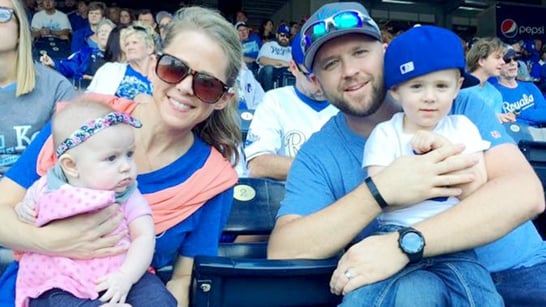
lindsay-norris-family-3-zoom-de32d1d9-fb60-4f8f-8238-8c2a3682dd31.jpgAs a Nurse you must be compassionate and sometimes you need to deliver hard news to a patient. No one can truly understand what someone goes through unless they have walked in the same shoes. Lindsay Norris had given heartbreaking news to patients many times as an Oncology Nurse but never knew exactly what her patients felt about the news until she got the news herself. She then wrote a letter addressed to every single one of her patients. See what this Nurse had to say.

“Dear every cancer patient I ever took care of, I’m sorry. I didn’t get it.” That is the title of the open letter oncology nurse Lindsay Norris wrote for her blog, Here Comes the Sun 927.

Norris penned the powerful piece on November 14, two months after she was diagnosed with stage III colorectal adenocarcinoma. “I didn’t get what it felt like to actually hear the words,” the 33-year-old from Olathe, Kansas, admitted in her note. “I didn’t get how hard the waiting is … I didn’t get how awkward it was to tell other people the news … I didn’t get the mood swings … I didn’t get that it hurts to be left out.”

“I didn’t get why you were always suspicious. You couldn’t help but wonder if [the doctors] all knew something you didn’t about your prognosis,” the mom of Harrison, 3, and Evelyn, 7 months, revealed. “We shared the percentages and stats with you — and that every cancer is different … but still — is there something more? Something they were protecting you from or just felt too bad to tell you? Logically, I know the answer to this but find myself with these feelings as well. I’m sorry. I didn’t get it.”

But Norris’ greatest regret? “I didn’t get how much you worried about your kids,” she wrote. “I should’ve talked to you more about them — and not just in terms of lifting restrictions or germs. You worried about how this was going to affect them. You worried about not being able to keep up with them or care for them properly on your bad days. You worried they’d be scarred and confused. You worried about leaving them. I’m sorry. I didn’t get it.”

The oncology nurse, who is currently undergoing oral chemotherapy and radiation, has been leaning on her husband of four years, Camden. “You felt thankful when your spouse would say, ‘Go get some rest and I’ll take care of the kids,’ but your heart hurt overhearing them play in the other room away from you, wondering if that was a glimpse into their future that didn’t have you in it,” Norris mused in her letter. “I’m sorry. I didn’t get it.”

Norris tells Us Weekly she’s learning to accept help — a topic she touched upon in her blog. “A few weeks ago I woke up feeling quite ill. This was still when I was insisting on bringing my kids to school myself,” she tells Us.“Halfway there I had to stop at a gas station to get sick. We went in the restroom, and we didn’t even make it in the door before I threw up. Of course my 3-year-old was concerned and asking a million questions. I felt pretty pathetic. I think it was just the first time I had to admit to myself that my treatment was affecting me.” Ever since then, Camden, 37, has been shuttling Harrison and Evelyn to school and daycare.

Meanwhile, Norris is focusing on what’s good. “Thanksgiving was a really nice day for me. Staying home with my little family with no plans felt amazing. Camden made a little turkey and stuffing for dinner,” she tells Us.“When I asked Harrison what he was thankful for, he answered, ‘God, my best friend Cooper, milk and my sissy.’ The future may not be promised, but when I look around, the view is beautiful.”

New Call-to-action

Topics: oncology nurse

How Nurses Should Be Using Social Media

Posted by Erica Bettencourt

Mon, Nov 14, 2016 @ 03:36 PM

social.pngPrivacy on social media feels like it's fading away when it seems as though everyone, and their mothers, are posting their daily lives on line. Need an answer to something, you can check online forums. If you forget someone's birthday, Facebook will remind you. 
 
You find yourself posting photos of your trips or special moments in your life. You even get into political views and other opinion related discussions online. But privacy in healthcare is something everyone takes seriously. So how does Nursing and social media work together in balance? Read below to find out! 

Thanks to a technologically advanced society and easy access to digital sources of communication, social media is becoming an increasingly effective, wide-ranging tool for nurses. However, with this resource comes great responsibility. As nurses navigate social networking sites, chat rooms, blogs and public forums, there is a dangerously thin line between professional and personal online etiquette. Health care employees must maintain patient confidentiality and privacy at all times, as well as serve as a positive representation of their place of employment. Inappropriate use of social media often leads to disciplinary action; and in the most serious cases, can negatively affect a nurse’s career and license.

Privacy Issues Regarding Nurses Using Social Media

“Nursing is a profession that is laden with risks related to disclosure of protected information,” says Jonathan Greene, social media expert and author of Facebook is a Pub Crawl: 15 Simple Strategies for Social Media Excellence. “For that reason, nurses have to be careful about anything that would violate HIPPA standards.”

According to the National Council of State Boards of Nursing (NCSBN), confidential information should be shared only with the patient’s informed consent, when legally required, or where failure to disclose the information could result in significant harm. Any breach of trust associated with a nurse-patient relationship has damaging repercussions, and often winds up hurting the overall trustworthiness of the nursing profession as a whole.

Breaches of patient confidentiality or privacy on social media platforms (whether intentional or inadvertent) can occur in many different ways, such as:

  • posting videos or photos of patients – even if they can’t be identified
  • posting photos or videos that reveal room numbers or patient records
  • descriptions of patients, their medical conditions, and/or treatments
  • referring to patients in a degrading or demeaning manner

A violation of patient confidentiality takes place as soon as a nurse shares information (or even the slightest bit of details – no matter how insignificant they may seem) over the Internet with someone who is not authorized to receive such information. Examples include reflecting on the severity of a car accident victim’s injuries, or even commenting on the number of medications that a patient has to take.

Beneficial Ways that a Nurse Can Use Social Media

With the ability to establish positive interaction and communication with patients (and their family), Debi Deerwester, DNP, FNP-BC, Chief Clinical Officer/Chief Nurse Practitioner Officer/Vice President of Clinical Operations at WhiteGlove Health, says there are many ways a nurse can utilize social media to a healthcare advantage, such as promoting the profession through educating the public.

Social media outlets and actions beneficial to nurses include the following:

  • Blogging: “Blogging on the industry they love in a positive and thoughtful way, [nurses] can become subject matter experts,” says John Lincoln, of Internet marketing company Ignite Visibility. “Having an individual blog and social media presence shows their dedication to the field, helps them stay on top of trends in the industry and looks great to employers.”

He also suggests that increasing visibility through an online presence can help nurses get ahead in their career, which in some cases, could lead to a higher position and/or a raise.

In addition to promoting their value within the workplace, nurses can also use social media to promote their outside, health-related endeavors and interests. “Usually I reserve public posts about health care to try convincing colleagues to buy my books,” says Nick Angelis, author of How to Succeed in Anesthesia School (And RN, PA, or Med School).

  • Twitter: Offering a popular real-time form of communication, Twitter is often seen as one of the easiest ways to maintain contact with people, especially in times of crises. From posting health safety notices to explaining drug recall information to answering emergency questions, nurses can provide quick responses and critical assistance to the public.

Twitter is also an effective way to create a health-related conversation with the public, or get a healthcare-related topic trending. “…nurses can probably capitalize on social media as an excellent tool for creating awareness about preventative health campaigns, general flu/pandemic information, educational tidbits…,” says Greene.

  • Facebook:With the ability to leave messages (both public and private), upload videos, and post photos, nurses are able to connect with others on many different levels when using Facebook, and can also help bridge the information gap between health care providers and patients.

“There is an inherent need within healthcare to pass information on to a particular patient and to connect with a patient on a level that promotes not only biological health, but also psychological health and community health,” says Ben Miller, a student at Vanderbilt Law. “In this sense, a nurse Facebook messaging a teenage patient about medicine changes is easy and builds trust within the system.”

  • YouTube: The visual and audio aspect of YouTube has a profound effect on a viewer’s understanding of health care, medical concerns, surgical procedures, and other treatments.

“I use YouTube to broadcast educational videos about anesthesia school…,” says Angelis. “In general, social media can be a positive force to enhance the role of nursing in the community and the perception of nursing among our friends and the public at large.”

  • Discussion Groups & RSS Feeds:Social media also provides nurses with an outlet to connect with other healthcare professionals for personal, emotional, and educational reasons. From getting tips on how to cope with workplace stress to answering questions about advanced nursing degree programs, there are many nurse-specific online groups to join or participate in.

“Social media groups can provide support and help nurses stay positive even in hard times,” says Lincoln. “By following the right social media feeds on sites like Twitter, Facebook, Google + and LinkedIn, nurses can get the latest medical news.”

According to Greene, nurses who interact with others across social media channels also have an opportunity to “humanize the nursing profession.” Examples include spotlighting employer achievements, sharing nurse profiles, and providing one-on-one communication.

How Nurses Should NOT Use Social Media

“From a legal perspective, nurses using social media to reach out to patients pose a few major privacy issues,” says Miller. “Since most social media systems present security problems (in how they’re “built”, infrastructure, and/or how the user interacts with the specific social media system), open sharing of sensitive and confidential information leads to conflict with HIPAA.”

“Most of these social media systems (such as Facebook) are not as privacy forward as we believe,” Miller says. “Even something as simple as texting among nurses about a specific patient raises huge privacy issues.”

Also, social media platforms tend to create a false sense of security for nurses who often believe they are voicing their opinions, engaging in discussions, and posting images under the protection of privacy settings. Anything sent privately to an individual or posted on a closed forum has the potential to become public knowledge. Additionally, deleting statements and images from a social media account does not mean they have been completely removed from the Internet.

As a rule of thumb, nurses should not use social media to:

  • Complain About or Comment on the Health of Patients: The American Nursing Association warns against making disparaging remarks about patients (even if they’re not identified) in order to avoid problems with social media. “Do not talk about how rude a patient is, how bad they look or unhealthy they are…it will find a way to leak out, and even if it doesn’t, it causes others to view you in less professional nature, as well as the institution you are associated with,” says Lincoln. “It can also damage others perception of your character.”
  • Post Photographs of Patients: After posting a picture of a young cancer patient on Facebook, a nursing student was expelled from school, and the nursing program barred from using the pediatric unit for teaching after the administration was alerted. The hospital and patient were easily identified through the picture, which is a violation of HIPAA.

Even if a nurse gains permission from a patient to take pictures, employers can still take action. Despite getting the consent of a patient to photograph an injury, an emergency room nurse who shared the images on a nursing forum for learning purposes was disciplined even though the patient’s face was not visible; the type of injury made it easy to identify the patient.

  • Rant About Place of Employment: Because of the nature of work that a nurse does, speaking negatively on social media about co-workers, administrators, job duties, their place of employment, and/or workplace policies can lead to disciplinary actions. These types of negative online comments also place a hospital or doctor’s office in a bad light, as well as jeopardize a nurse’s job security. Even when opinions are voiced under the strictest privacy settings, there is always the possibility that online commentary can reach unintended readers.

To minimize the chances of violating workplace policies, using a personal email address as a primary means of identification on social media accounts instead of an email address associated with a hospital or place of employment is highly recommended.

Additionally, when writing a blog or participating in online activities that have the potential to negatively impact the reputation (or go against the policies of a healthcare employer), avoid establishing a direct connection to the place of employment. For this reason, many nurses comment anonymously or write blogs using a pseudonym.

  • Blow Off Work-Related Steam: Because of the visibility that social media platforms provide, Lincoln says it is critical for nurses to maintain composure and professionalism at all times.

“One of the most important things for a nurse to avoid is speaking negatively about a patient on social media,” he says. “This might seem like a no-brainer, but everyone gets frustrated at times and in many cases in medical situations, a nurse may feel overwhelmed.” Lincoln stresses to refrain from saying anything negative about “patient interaction, the prospect of patient recovery, or even just a general bad day on the job.”

  • Use Offensive Language and/or Voice Offensive Comments: Since nurses work with a diverse flow of patients that come from a wide range of economic-, racial-, ethnic- and religious backgrounds, making social media comments that are threatening, harassing, profane, obscene, sexually explicit, racially derogatory, homophobic, or deemed controversial are often grounds for discipline at the workplace.

Social Media Policies

An increasing number of hospitals, medical facilities, and healthcare employers are developing and implementing social media policies, including the likes of the American Medical Association, the Cleveland Clinic, the Mayo Clinic, Vanderbilt University Medical Center, M.D. Anderson Cancer Center, Children’s Hospital Los Angeles, and Kaiser Permanente. The National Council of State Boards of Nursing (NCSBN) also offers a white paper titled “A Nurse’s Guide to the Use of Social Media.”

Lincoln feels that Massachusetts General Hospital’s social media policies are an example of having “really done it right.” Not only does Mass General have social media guidelines in place for employees, but also a policy established for those who interact with the hospital on social media.

“Please understand that we cannot respond to every comment, and that we cannot offer medical advice, diagnosis or treatment via the Internet. If you have a question about your specific medical condition, you should contact your doctor or other qualified healthcare professional.”“For your privacy, you should consider carefully before posting personal medical information to the Internet. Please remember that your posts and comments are available for all to see.”“Users are responsible for content submitted to social media sites.” -from Guidelines for Participation in Mass General Social Media


“I am a strong believer that every company should have a social media policy in place,” says Lincoln. “This can help avoid legal issues, and give employees and clients a clear perspective on what the company is comfortable with being shared online.”

Consequences of Social Media Abuse

The consequences regarding a nurse’s improper or inappropriate use of social media platforms come with varying levels of discipline – all of which are dependent upon the action in question, workplace regulations, and any social media policies already in effect.

For example, not only can a medical facility take action against a nurse who has violated a patient’s privacy, but also the state board of nursing. State laws can additionally come into play, and it is not uncommon for legal and criminal investigations to take place when a nurse crosses the line.

Disciplinary actions that individuals can face include:

  • fines
  • suspension
  • required sensitivity training
  • expulsion from nursing school
  • being fired from a job
  • loss of licensure
  • criminal charges
  • jail time

The most serious offenses often involve law enforcement, with some cases being referred to the FBI for investigation of HIPAA violations, as seen in the firing of two nurses who photographed and posted the pictures on the Internet of a patient that underwent an X-ray procedure for rather sensitive, easily identifiable circumstances. Incidents of a sexual nature, such as exposing the image of a patient’s buttocks online, can also involve the Sex Crimes unit of the local police department.

Nurses who abuse social media (as well as digital and electronic media while on the job, such as taking cell phone pictures of patients) also cause their employer to come under scrutiny and suffer consequences, such as the admissions ban imposed on nursing home Kitsap Health & Rehabilitation Center for employing workers that took nude photographs on their cell phones of dementia patients. The incident led to an investigation of the facility, and the threat of being cut from the Medicare/Medicaid program, which provides vital reimbursements of funds for the services they offer.

In conclusion, social media policies for nurses will continue to evolve in order to keep in line with advancements in technology and the Internet. The key to successfully navigating the ups and downs that come with having an online presence and identity is to find a happy, safe, and responsible middle between enjoying the personal and professional benefits of social media without breaking the rules of patient privacy and confidentiality.

In addition to being mindful of the importance regarding the disclosure of patient- and workplace-related information via social media…keeping up with workplace policies, relevant state and federal laws, and professional standards as they apply to the nursing profession are just as significant.

Want more? Join our bi-weekly newsletter for the best content in Nursing!
New Call-to-action

Topics: social media

This Oncology Nurse Took in A Patient’s Son After Her Death

Posted by Erica Bettencourt

Fri, Nov 04, 2016 @ 11:31 AM

tricia-seamans-tricia-somers-zoom-cb35cffe-aaa4-4753-8d5f-5f5fb4d3a796.jpgTwo complete strangers, both named Tricia, meet and after 10 days one of them asks the other to take care of her 8 year-old son if she dies. Nurses are known to be caring and loving, always going the distance to help anyone in need. This story shows you a Nurse who goes beyond that. We see there are still great people out there and the power of instincts and compassion can save lives in more ways than one. 

An angel. That’s how Tricia Somers described her oncology nurse, Tricia Seaman, at PinnacleHealth Hospital in Harrisburg, Pennsylvania. “Before she even said anything, I just felt comfort. It was almost like someone just put a warm blanket on me,” Somers told CBS News in 2014. “I’ve never felt anything like that before.” The connection was so deep that when the single mom learned her cancer was terminal, she turned to Seaman with one last dying wish.

“Tricia looked at me and said, ‘When I die, will you and your husband raise my son?'” the longtime nurse from Pennsylvania tells Us Weekly. Since the women had known each other just 10 days, Seaman encouraged Somers to take some time to think about her request. But Somers, who had no family to care for her beloved Wesley, 8, knew exactly what she was doing. “She later told me, ‘I knew from the very first moment that I met you that you were going to help me,’” says Seaman. “'I didn’t know how. I just knew you were going to help me.'”

And Somers was right. In May 2014, Seaman and her husband, Dan, welcomed both Somers and Wesley into their family. “Tricia was having trouble walking, she could barely move, and that was when we made arrangements to bring her here to our house,” Seaman tells Us. “That way she didn’t have to worry about trying to get food for Wesley, or worry about what medicine was due for herself. We took care of all of that.”
 
When Somers passed away on December 7, 2014, at the age of 45, the Seamans became Wesley’s legal guardians. No longer an only child, the now-10-year-old counts the Seamans’ kids Anna, 20, Jenna, 18, Emma, 15, and Noah, 12, as his siblings.
 
“He’s so fun. He’s so his mom. I mean, she was just so larger than life,” says Seaman, 43. “She and I had opposite personalities. I remember one time we were talking about our dating histories. Hers was very colorful, and mine was very boring. I was like, ‘I dated this person and that person and then I met Dan and we got married and had a family.’ She goes, ‘Is that it!? Well, that’s about as exciting as paint drying.’”
 
Seaman, who wrote the book God Gave Me You about her friendship with Somers says the fifth-grader talks about his mom every day. “Tricia’s a part of our lives and always will be,” Seaman tells Us. “Even though she’s not here with us anymore, we sure didn’t lose, because knowing her and having the privilege to raise her son, what a gift. We’re just so much better for knowing them both.”
 
New Call-to-action

Topics: Oncology Nursing

This Baby Was Born Twice

Posted by Erica Bettencourt

Thu, Oct 27, 2016 @ 11:35 AM

baby-born-twice-doing-well.jpgImagine being able to say you were born twice, in fact, you had your first surgery before you were born as well. Margaret Boemer had been in her 2nd trimester when she got heart breaking news that her unborn child had a rare birth defect. Enduring a previous miscarriage, this news truly shook Margaret. 
 
The expecting parents decided to go ahead with a surgery that involved removing the baby from the womb half way, removing the tumor, and putting the baby back in to the womb. Thankfully the surgery removed 90% of the tumor and 12 weeks later Lynlee was born. A short while after that, the second surgery was performed, removing the last 10% of the tumor. Nothing short of a miracle, this new life continues to grow. 

Texas mom Margaret Boemer will have a fascinating story to tell her daughter Lynlee about when she was born.

During her second trimester, Boemer learned during a routine ultrasound that her unborn child had a large tumor growing out of her tailbone. Doctors told her the baby had Sacrococcygeal Teratoma (SCT), a rare birth defect occurring in only one in every 40,000 pregnancies.

“It was a big shock and we were scared,” Boemer told CBS News. “I had just suffered a miscarriage the prior year. To think that I might lose another baby was very hard.”

The large mass was robbing her daughter of blood and would have caused her heart to give out before birth.

But at 20 weeks pregnant, Boemer and her husband Jeff met with doctors at Texas Children’s Fetal Center in Houston, who told her there was an option to perform emergency fetal surgery.

After other specialists advised them to terminate the pregnancy, they decided to move forward with the risky procedure to try to save their baby’s life.

161019162513-01-baby-born-twice-super-169.jpg

“Lynlee would not have made it without this surgery,” Dr. Darrell Cass of the Texas Children’s Fetal Center told CBS News. With it, she had a 50/50 chance of survival.

At almost 24 weeks, Cass and his team made an incision in Boemer’s abdomen and pulled almost half of Lynlee’s body out of her mother’s uterus to remove the tumor – which was almost larger than the baby herself. Then came the challenge of putting Lynlee back in and closing the uterus. 

“We have to get the tumor away but then we have to make sure the baby can stay safely inside for a number of weeks afterward to have any kind of survival,” Cass said.

After a five-hour procedure, the doctors were able to remove 90 percent of the tumor and safely return Lynlee back inside her mother. Boemer’s uterus was sewn shut and her pregnancy progressed.

Twelve weeks later, Lynlee was essentially born a second time via C-section. At eight days old, she underwent surgery to remove the rest of her tumor. 

Doctors will continue to monitor Lynlee all the way into adulthood. So far she is reaching all her milestones.

“She’s doing great now,” Boemer said. “We’re practicing rolling over.”

New Call-to-action

Topics: baby born twice, out of womb surgery, pediatric surgery

Recent Jobs

Article or Blog Submissions

If you are interested in submitting content for our Blog, please ensure it fits the criteria below:
  • Relevant information for Nurses
  • Does NOT promote a product
  • Informative about Diversity, Inclusion & Cultural Competence

Agreement to publish on our DiversityNursing.com Blog is at our sole discretion.

Thank you

Subscribe to Email our eNewsletter

Recent Posts

Posts by Topic

see all